


South Melbourne is the inner-city suburb at the northern end of the bayside corridor — denser than Middle Park, more commercially active than Albert Park, and home to one of Port Phillip's major weekend draws. This profile covers the Market, both commercial strips, the apartment question, schools, transport, safety, and price brackets across four distinct sub-markets.

South Melbourne is the inner-city suburb at the northern end of the bayside corridor, and the one most resistant to a single-suburb summary. It is denser than Middle Park, more commercially active than Albert Park, more residentially mixed than St Kilda, and home to one of the major weekend draws in the City of Port Phillip: South Melbourne Market.
A short orientation. South Melbourne is in postcode 3205, bounded by City Road and the Westgate Freeway approach to the north, St Kilda Road and the Domain Precinct to the east, Albert Park Lake's northern edge to the south, and Montague Street and the Port Melbourne boundary to the west. About 14,000 residents live there (ID's 2025 estimated resident population; the 2021 Census recorded 11,685), materially more than any of the suburbs covered in our four southern bayside profiles. The population skew is professional and adult, with more singles, couples, and renters than family households.
This profile works through the streetscape, the Market, the two parallel commercial strips, the apartment question (specific to South Melbourne), schools and transport, the safety question, and the price brackets. It's intended for buyers thinking about whether South Melbourne matches their brief, or whether Albert Park, Port Melbourne, or Southbank would answer it more directly.

South Melbourne has the most varied housing typology of any suburb in our bayside-corridor coverage. Three patterns dominate, often within the same street.
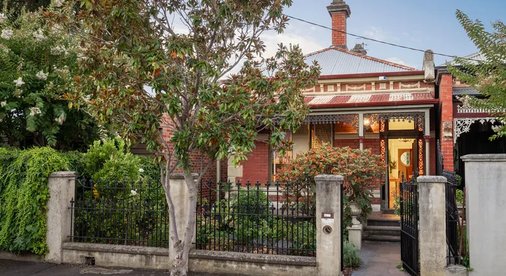
Heritage Victorian and Edwardian terraces. Concentrated in the Emerald Hill heritage precinct (the streets around Cecil, Park, Bank, and Coventry between Clarendon and Albert Road) and across most of the southern half of the suburb. Many terraces are single-fronted on lots of 150 to 250 square metres; some larger doubles sit on the wider streets. Renovation activity is consistently high.
Warehouse and commercial conversions. South Melbourne's industrial past has produced a meaningful pool of converted warehouse, factory, and former-commercial buildings. These cluster around the Clarendon and Coventry Street corridors and the streets running off them. They typically deliver larger floor plates than the standard terrace stock, with character that varies considerably building to building.
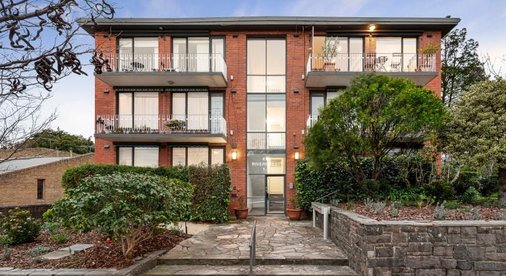
Apartment stock. South Melbourne has materially more apartment stock than Middle Park or Albert Park, with concentrations along Clarendon Street, Kings Way, the City Road edge, and the Albert Road frontage. Newer apartment buildings continue to come on line, although the City of Port Phillip's 2024 South Melbourne Structure Plan (Amendment C219port) has set a 20-year framework for managing future development.
A practical street-level note: the high-rise on Park Street is a known landmark. Buyers should walk the specific block before offering.
The Market deserves its own substantial section because it is, in search-intent terms, larger than the suburb itself.
South Melbourne Market has operated continuously since 1867 from its location on Cecil Street, between Coventry and York Streets. It opens Wednesday, Friday, Saturday, and Sunday, with the busiest period being Saturday between 10am and 1pm. It functions as a fresh-produce market, a hot-food destination, a specialty-grocer hub, and a community gathering point.
Specific named stalls and operators that come up repeatedly in resident reviews and food guides: Padre Coffee (the in-market specialty roastery), Bambu (Thai), Hawker Hall (Asian street food), Wood Frog Bakery, Aptus Seafood, Rita's Nuts, Ralph's Meats, Flour Patisserie, Skewer'd (Greek souvlaki), Simply Spanish (paella), and Mile End Bagels. The original South Melbourne dim sim, sold at the market and at multiple stalls in proximity, is locally treated as a Melbourne institution.
A practical note on Market days. The Saturday peak is genuine — shoulder-to-shoulder between 10am and 1pm. Weekday mornings (Wednesday, Friday) are materially quieter. The Market closes Mondays, Tuesdays, and Thursdays. For residents within a ten-minute walk, this matters: the suburb's daily shopping rhythm runs around the market schedule.
South Melbourne has two parallel commercial spines, which (combined with the Market on Cecil Street) gives it the highest commercial-square-foot intensity of any corridor suburb.
Clarendon Street is the dominant retail and food strip, running north-south through the centre of the suburb. The strip carries Coles and Woolworths supermarkets within a short walk, an Aldi nearby, multiple cafes, restaurants, pubs, and specialty retail. Trams 96 and 12 run along it. The notable named venues: Lamaro's Hotel (the gastropub at 273 Cecil Street, the suburb's signature pub-restaurant), Brewmanity (a craft-beer brewery and rooftop bar, repeatedly cited as a young-professional staple), Honey Bar (one of the few late-trading bars, open until 3am on weekends), and the Golden Gate Hotel.
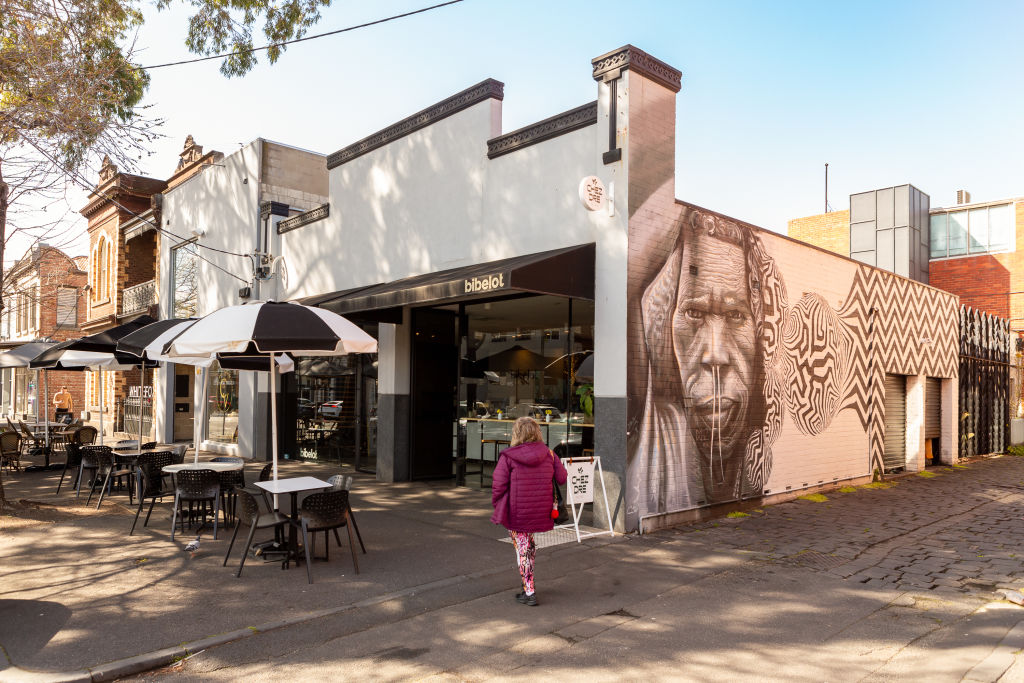
Coventry Street runs roughly parallel to Clarendon, with a more boutique-retail and mid-tier-restaurant mix. It hosts Hawker Hall on the Market side, Chez Dre (the long-running laneway pâtisserie), Mister Margherita (pizza), and a series of smaller cafes and bars.
For buyers, the practical implication: this is a suburb where you can get most of your weekday and weekend life done within a ten-minute walk. The trade-off is that the same density brings noise, parking pressure, and street-life energy that is the inverse of Middle Park's character.
The South Melbourne Town Hall, on Bank Street between Clarendon and Cecil, is undergoing a major refurbishment with new slate roof, a 150-seat theatre, and expanded community spaces scheduled for completion by 2027.
Unique to South Melbourne, the apartment market is large enough that buyers should think about it explicitly. Three apartment sub-pools coexist: older walk-up blocks (1950s–70s) along the residential streets, mid-tier 1990s–2010s buildings along Clarendon Street and the City Road edge, and recent high-amenity builds between City Road and the rail corridor.
For investors, the apartment market is structurally supported by professional renter demand from CBD employment; land tax implications on additional properties are worth modelling at South Melbourne price points. For owner-occupiers, the building-by-building check matters substantially: owner-occupier ratios, body corporate fee structures, and noise context vary widely.
Buyers attracted to warehouse conversions should treat each as a separate property type. Floor plates, ceiling heights, natural light, and parking arrangements vary by building, and the conversion premium can be material.
South Melbourne's family-buyer demand is smaller than the corridor's southern suburbs, reflected in the schools picture. South Melbourne Primary School, despite its name, is located at Ferrars Street in Southbank and may be relevant to some nearby addresses; school zones should be checked address-by-address through Find My School. Albert Park College, the local government secondary for Albert Park and Middle Park, also serves South Melbourne addresses through catchment overlap. Independent options nearby include Wesley College's St Kilda Road campus, Melbourne Grammar, and Mac.Robertson Girls' High School, located on Kings Way, Melbourne.
Transport is the suburb's standout infrastructure asset. Three trams — the 96 along Clarendon, the 12 along Park Street and the southern reach, the 1 on Albert Road — provide direct CBD access. Walking to the western edge of the CBD takes 15 to 20 minutes along Kings Way or City Road. By car, the CBD is roughly 5 to 15 minutes off-peak.
The closest station on the CBD edge is Southern Cross, walkable in around 20 minutes from the suburb's northern reach. South Melbourne's eastern edge now has heavy-rail access via Anzac Station, opened as part of the Metro Tunnel and located under St Kilda Road near Domain Road and Albert Road.
A buyer profile of South Melbourne that doesn't address safety perception loses the audience that's asking. South Melbourne has the usual inner-city safety considerations — apartment interfaces, nightlife and retail activity, public housing nearby, traffic corridors and parking-related theft risk. Buyers should check current Crime Statistics Agency data for postcode 3205 and walk the specific block at different times. Two local features are worth noting.
The first is the Park Street public-housing tower complex, a known landmark. Most of the suburb runs on the inner-city baseline. Buyers specifically asking about the Park Street precinct should inspect the block at different times and check current crime data rather than generalise.
Some community reviews note activity along certain streets near the City Road edge; a daytime and evening walk before offering remains good practice for any South Melbourne buyer.
Four observable sub-markets in South Melbourne, more distinct than in any other corridor suburb.
Emerald Hill terrace pool. The heritage residential precinct around Cecil, Park, Bank, and Coventry. Single-front and double-front Victorian terraces, with consistent renovation activity. The suburb's most stable price segment.
Warehouse and commercial conversions. The character-building stock around the industrial edges of Clarendon and Coventry. Larger floor plates than terraces; pricing varies widely by building.
Newer apartment stock. The buildings from the 2010s onwards, mostly along Clarendon, Kings Way, and the City Road edge. Wide pricing range; building-by-building analysis matters substantially.
Older walk-up apartments. The 1950s–70s blocks scattered through the suburb. Lower price points; building condition and body corporate health vary considerably.
A practical pricing note. South Melbourne's price variance is the widest in our middle-south Melbourne tracking by a meaningful margin. A heritage terrace on Howe Street, a warehouse conversion off Coventry, and a 1960s walk-up off Park Street can all transact at materially different levels for genuine reasons. Anchoring to a “South Melbourne median” produces misleading comparables. The work in a South Melbourne brief is more about choosing the right sub-market than about narrowing within one.
Professionals working in or near the CBD who want a 5-to-15-minute commute, a real food-and-bar culture within walking distance, and access to the Market. The suburb is built for this buyer.
Investors seeking apartment stock with stable professional renter demand and tightly-held heritage terrace stock with steady capital growth profiles. The suburb's two distinct investment thesis options live in the same postcode; our property investment guide covers how to evaluate both.
Downsizers leaving larger family homes who want urban density, walkability, and proximity to the CBD without the full inner-east price points of South Yarra or Toorak.
Singles and couples who want their daily life within walking distance and accept that the suburb's commercial intensity is the price of that convenience.
South Melbourne doesn't suit buyers looking for a four-bedroom house on 700 square metres at suburban prices, buyers who want a quiet residential street with no through-traffic, buyers whose brief depends on a top-tier government primary school catchment, or buyers who want beachside proximity (Port Melbourne or Albert Park's lakeside frontage will do that better).
We've helped clients buy across South Melbourne's sub-markets, and the brief discipline matters more here than in almost any other corridor suburb. The variance between a heritage terrace, a warehouse conversion, and an apartment is structural, not cosmetic, and the wrong sub-market produces a wrong answer to the right brief. Before searching, work out which sub-market and which block fits your specific use case.
For buyers leaning toward the wider 3205–3206 area, the Albert Park profile sets out the comparable trade-offs. For the broader bayside corridor, the Middle Park, St Kilda, and Elwood profiles cover the alternatives. All corridor profiles are available on our suburb profiles hub.
If you’d like to talk it through, we can map out the next steps.
No obligation. Just context.

It all starts with a confidential conversation.



.svg)

.svg)