


Most Melbourne buyers have no reliable way to know what a property is actually worth. Online tools disagree by $30,000 to $200,000, agent price guides are marketing tools, and bank valuations routinely come in $50,000 to $100,000 below purchase price. This guide explains how properties are actually valued — and how to assess value with confidence.
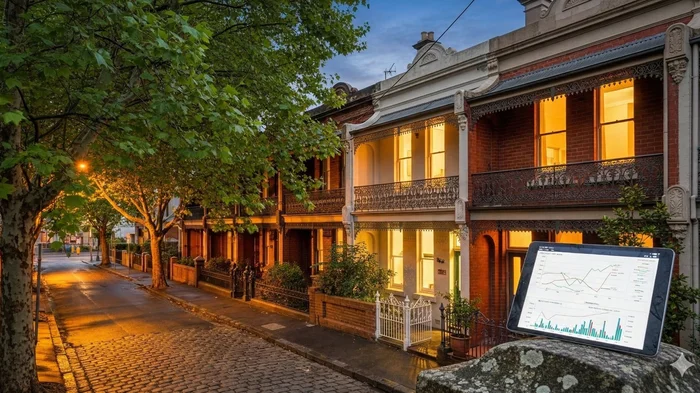
Most Melbourne buyers have no reliable way to know what a property is actually worth before they commit to buying it.
Online tools disagree by $30,000 to $200,000 on the same property. Agent price guides are marketing tools, not genuine estimates, and properties routinely sell 15 to 20 percent above the quoted range. Bank valuations come back $50,000 to $100,000 below purchase price, and buyers don't know if they've overpaid or the bank is wrong. Comparable sales look straightforward until you try to do them yourself. Land size, condition, renovations, and micro-location make "like-for-like" almost impossible without experience.
This guide explains how Melbourne properties are actually valued: by algorithms, by agents, by banks, and by professionals. It shows you how to assess value accurately enough to bid, offer, and negotiate with confidence.
Sites like realestate.com.au, domain.com.au, propertyvalue.com.au, and bank tools like CommBank's property estimate all use automated valuation models (AVMs). These pull recent sales data, land size, bedroom count, and suburb-level statistics to generate a number.
What they miss is everything that actually matters at the individual property level. Renovations, condition, aspect, views, street quality, floor plan layout, noise exposure, easements, heritage overlays. None of that makes it into the algorithm.
Misreported data makes it worse. A subdivided property listed as a single lot, a study advertised as a bedroom, an incorrect bathroom count. If the inputs are wrong, the output is meaningless. Each platform uses different algorithms and different data sources, which explains why they disagree by $30,000 to $200,000 or more on the same property.
What to do instead: Use online tools as a starting point only. Cross-check at least three platforms and note the range, not any single figure. Then verify the property data each tool is using: bedroom count, land size, property type. If those basics are wrong, disregard the estimate entirely.
Multiple buyers report online estimates coming in 10 to 15 percent below actual sale prices. That creates false expectations about what a buyer can afford. You budget for $850,000, the property sells for $1 million, and you assume you can't compete. In reality the tool was wrong, not the market.
The opposite happens too. Some platforms overvalue by $200,000 or more, creating false confidence that evaporates on auction day.
One case illustrates the problem clearly. CommBank's property estimate tool returned a "very high confidence" valuation of $1,250,000 on a property that sold at auction for $1,400,000. Even the platform's own confidence rating was unreliable.
What to do instead: Don't use online valuations to set your budget. Use them to identify suburbs and property types within your range, then validate with actual comparable sales. And for stamp duty calculations, use the State Revenue Office Victoria's official calculator. Don't trust bank calculators for that either.
Underquoting means advertising a property at a price the agent knows, or should know, is below the likely selling price. In Victoria, it is illegal under the Sale of Land Act 1962 and the Estate Agents Act 1980. Agents must provide a genuine estimate of the property's selling price in the Statement of Information (SOI).
The reality looks different. Properties listed at "$600,000 to $660,000" routinely sell for $687,000 or more. Properties advertised at "$365,000 to $400,000" attract agents who only consider offers above $650,000. Industry-acknowledged pattern: price guides sit at approximately 80 to 92 percent of the final sale price on average.
The incentive structure explains why. A lower price guide means more inspections, more competition, and a higher final price. The agent's commission rises with the sale price. Consumer Affairs Victoria has received more than 5,000 complaints about underquoting since 2022, issued more than 200 infringements, and collected $2.3 million in fines. The maximum penalty under the Estate Agents Act is currently $48,800, with potential exposure to Australian Consumer Law penalties of up to $2.5 million for individuals and $50 million for corporations.
A significant regulatory change is coming. The Victorian Government announced in November 2025 that legislation will be introduced in 2026 requiring agents to publish the vendor's actual reserve price at least seven days before auction. Until that law passes, the existing SOI regime applies.
Under Victorian law, every residential property listed for sale must have a Statement of Information. It must include an indicative selling price (a single figure or a range within 10 percent), three comparable sales with address, date, and sale price, and the suburb median house or unit price.
The SOI must be displayed at all open for inspections, included with online advertising, and provided to any prospective buyer within two business days of a request.
How agents work around it: selecting comparable sales that support a lower range, not asking the vendor for their reserve until auction day (under current rules), and claiming the vendor changed their expectations mid-campaign. Enforcement has improved, but buyers still report properties selling well above the SOI range as a routine outcome.
The real cost to buyers is time and money. Attending dozens of inspections only to discover properties sell $200,000 to $400,000 above the advertised range means months of wasted weekends, building inspection fees on properties you never had a chance at, and accumulating emotional exhaustion.
What to do: Always request the SOI before attending an inspection. If the price guide seems unrealistically low for the suburb and property type, it probably is. Cross-check the agent's comparable sales against your own research. Are the comps genuinely comparable, or cherry-picked to support a low range? Track actual sale results in your target suburbs for four to six weeks before making offers. This is the single most reliable way to calibrate your expectations.
Five factors must align for a sale to be genuinely comparable: property type, land size, bedroom and bathroom count, condition and renovation level, and recency (ideally within three to six months).
Land size alone can drive $150,000 or more in price differences in the same suburb. A 300-square-metre lot and a 600-square-metre lot on the same street are not comparable, even if the houses have the same number of bedrooms. Condition is the hardest factor to assess from data alone. A fully renovated three-bedroom house sells for a very different price than an original-condition three-bedroom, even if every other metric matches.
Be aware that sold prices on realestate.com.au and domain.com.au are not always accurate. There are reports of agencies inflating sold prices by $170,000 or more above the actual sale price. Pull your own comparable sales from multiple sources. Don't rely solely on the agent's SOI.
How to approach it: Match on land size first, then property type, then bedroom count, then condition. Adjust for recency. A sale from 12 months ago in a rising or falling market needs context. If you can't find three genuinely comparable sales, that's a signal the property is harder to value. Proceed with extra caution.
Buyers frequently ask whether renovations can really add $400,000 to a property in a lower-priced suburb. Sometimes yes. Usually the claimed uplift is inflated.
Cosmetic renovations (paint, carpet, styling) create the appearance of value but cost $10,000 to $30,000 and may add only a fraction to the sale price. Structural renovations (extensions, additional bathrooms, new kitchen) genuinely add value, but the cost-to-value ratio varies dramatically by suburb.
The test: compare the renovated property against the unrenovated sale price of a similar property on the same street, then compare against the actual renovation cost. If the gap doesn't make sense, the price is aspirational. Spending $60,000 on exterior updates will not necessarily be recouped in four years. Location, market conditions, and quality of work all matter.
Melbourne's median house value was approximately $989,000 as at January 2026, according to Cotality data published by NAB. That number tells you something about Melbourne's market overall. It tells you nothing about any specific property.
A suburb with a $1 million median has properties selling for $650,000 and $1,500,000. The median tells you nothing about which one you're looking at. It shifts month to month based on what sold, not on whether prices actually changed. If five expensive homes sold this month and five cheaper homes sold last month, the median rises even if no individual property changed in value.
"Worst street in the best area" versus "best street in the worst area" is the kind of distinction median figures cannot capture. Micro-location drives value more than suburb-level statistics.
What to do: Use median prices to compare suburbs at a macro level. For individual property decisions, comparable sales are the only reliable tool.
Banks don't value properties the way buyers do. A bank valuation reflects lending risk, not market enthusiasm. Its purpose is to estimate what the bank could recover if you defaulted and the property had to be sold.
There are three main types of bank valuations used in Australia. A full valuation involves a licensed valuer inspecting the property inside and out, writing a report with photos, condition notes, zoning information, and comparable sales. This is the most common type and is typically required when the loan-to-value ratio (LVR) exceeds 80 percent. A kerbside valuation involves an external inspection from the street without entering the property, generally used for lower-risk loans. A desktop or automated valuation uses data analytics and comparable sales without any physical inspection, used for low-risk transactions with low LVRs.
Which type you get depends on your LVR, loan amount, property type, and lender policy. Auction sales are generally accepted at face value because the competitive bidding process serves as market evidence. Private sales are more likely to trigger conservative valuations because there's no competitive bidding to validate the price.
Multiple buyers report bank valuations coming in $50,000 to $100,000 below the agreed purchase price. This is not rare.
What to do: Ask your mortgage broker which type of valuation your lender will use, and whether you can request a full valuation if you're concerned. If buying via private sale, factor in valuation risk. Have a plan for what you'll do if the bank values lower than your offer. Your broker can order valuations from multiple lenders to find one that matches. This is standard practice, not gaming the system.
A low bank valuation does not necessarily mean you overpaid. It means the bank's risk assessment is more conservative than the market at that moment. But it can also be a genuine signal, particularly in a cooling market where banks are deliberately pulling back lending exposure.
The emotional impact is real. Buyers report waves of regret, questioning whether they overpaid by 5 to 10 percent, and some have backed out of purchases entirely over valuation shortfalls. FOMO-driven overpayment is a common and costly mistake. One buyer described allowing fear of missing out to push them $10,000 to $15,000 above the valuation.
Long-term perspective matters. In a growing market, a $10,000 to $15,000 overpayment becomes irrelevant within one to two years. In a flat or declining market, it matters more.
What to do: If the valuation is within 5 percent of your purchase price, it's likely within normal variance. Talk to your broker about options. If the valuation is 10 percent or more below, treat it as a serious signal. Either renegotiate, get a second valuation through another lender, or reassess whether the price is justified.
In Victoria, the vendor sets the reserve price: the minimum they'll accept at auction. Under current rules, this is not disclosed to buyers before or during the auction. (The new reserve disclosure laws, when enacted, will require publication at least seven days before auction.)
If bidding doesn't reach the reserve, the property is "passed in." The highest bidder gets first right to negotiate with the vendor. Whether a passed-in property is a bad deal or an opportunity depends entirely on why it passed in. An unrealistic reserve, weak marketing, genuine lack of demand, or just a quiet auction day can all produce the same result.
Agents use pre-auction offers as market intelligence, not as genuine sales. The offer tells the agent where buyer interest sits, which informs the auction strategy.
What to do: If a property passes in and you're the highest bidder, you have a stronger negotiating position, but the vendor is not obligated to sell at your bid. Ask the agent for the reserve after the property passes in. If the property is relisted weeks later at a higher price, assess it fresh using comparable sales. Don't anchor to the auction result.
Your maximum bid should be set by comparable sales evidence. Not by how much the bank will lend you. Not by how much you emotionally want the property.
The pressure to bid "just $5,000 more" is a deliberate tactic. Auctioneers are trained to push buyers past their limits one small increment at a time. The evidence-based approach is the antidote: if your comparable sales analysis says the property is worth $920,000, then $920,000 is your ceiling.
Before bidding, attend three to five auctions in your target suburbs as an observer. Note where properties sell relative to the quoted range. This calibrates your expectations better than any online tool.
What to do: Build a comparable sales dossier for any property you intend to bid on. Write your maximum bid down before auction day. Tell your partner. Do not deviate. If you're uncomfortable bidding, consider hiring a buyer's agent or professional bidder for that specific property.
The answer depends on what "asking price" means in context. In Melbourne, the quoted range is frequently 10 to 20 percent below what the agent expects the property to sell for.
Reports from buyers describe needing to offer $20,000 to $60,000 over asking just to be competitive, with some properties selling $60,000 to $100,000 above asking. Agents represent the seller. Their role is to extract the maximum price from you. They will tell you not to "waste their time" with offers at the lower end of the range.
What to do: Base your offer on comparable sales evidence, not on the agent's price guide. Start below your ceiling and leave room to negotiate up. Put a time limit on your offer (24 to 48 hours) so the agent can't shop it indefinitely. Communicate key terms through your solicitor or conveyancer, not just verbally with the agent.
Properties listed as "Contact Agent" or "Price on Request" force buyers to reveal their budget first, reversing the information advantage.
In Victoria, the Statement of Information is legally required regardless of how the listing is displayed. If the SOI is missing from the listing, request it directly before inspecting. It must include the estimated selling price or range (within 10 percent) and three comparable sales. If the SOI price range doesn't align with comparable sales in the area, the agent may be underquoting.
Two fears drive bad decisions: the fear of missing out (which leads to overpaying) and the fear of overpaying (which leads to missing opportunities by being too cautious).
Buyer's remorse after committing is common. Buyers report questioning whether they overpaid by 7 percent, experiencing waves of regret, and in some cases backing out of purchases entirely for mental health reasons.
The antidote is comparable sales evidence. If you can justify your price with three genuine comps, regret becomes less likely. You made an evidence-based decision, not an emotional one.
Long-term context helps too. Most buyers who feel they overpaid in the short term find the difference becomes irrelevant within three to five years in a growing market. The bigger risk is spending 12 or more months searching and never buying.
A buyer's agent starts with the same tools available to any buyer, but applies them with more discipline and local knowledge. Professional comparable sales analysis means matching on five or more factors (property type, land size, bedrooms, condition, and recency), adjusting for known differences, and weighting more recent sales more heavily.
The difference is context. A buyer's agent who works a specific set of suburbs knows which streets command premiums, which properties have flood risk that doesn't show in data, and which agent's campaigns consistently underquote. That context layer turns raw data into a reliable price range.
Beyond data, a buyer's agent physically inspects properties and assesses factors that no algorithm captures: aspect, noise levels, quality of natural light, the condition of neighbouring properties, foot traffic patterns, and development potential.
They also read the agent's campaign strategy. How the property is being marketed, whether the campaign is being run to create competitive tension, whether the SOI comps are genuinely comparable or cherry-picked. This is valuation as a negotiation tool. When you can present evidence to justify an offer below asking, or when you know a property is genuinely priced at value, you negotiate from a position of knowledge rather than anxiety.
This is not exclusive to professionals. Any motivated buyer can apply the same methodology. But it takes time, discipline, and local knowledge that most buyers are building while simultaneously trying to buy a home. If you'd rather start with someone who already has that knowledge, an initial conversation costs nothing and changes everything.
Cross-check online tools (noting their limitations), pull your own comparable sales (three to six recent sales matching on type, size, condition, and location), review the Statement of Information, and attend auctions in the area to see what properties actually sell for. No single tool gives a reliable answer. Triangulating multiple sources does.
No. Discrepancies of $30,000 to $200,000 or more are common across platforms. They use different algorithms and data sources, miss property-specific factors, and frequently underestimate by 10 to 15 percent. Use them as a starting point, never as your final figure.
Underquoting is when an agent advertises a property below the price they genuinely expect it to sell for. In Victoria it is illegal but widespread. Spot it by comparing the price guide to recent comparable sales in the area. If the guide is 15 to 20 percent below what similar properties have sold for, it's likely underquoted. Always request the SOI.
A legally required document in Victoria showing the agent's estimated selling price or range (within 10 percent), three comparable sales, and the suburb median. It must be available before the first inspection and displayed at open for inspections. If it's not on the listing, request it directly from the agent.
Bank valuations reflect lending risk, not market enthusiasm. They're deliberately conservative. Auction sales are usually accepted at face value, but private sales often trigger lower valuations. A low valuation doesn't always mean you overpaid, but it's worth investigating. Your broker can order valuations from multiple lenders.
Market value is what a willing buyer pays a willing seller in an open market. A bank valuation is a risk assessment for the lender: how much they'd recover if you defaulted and they had to sell. The bank valuation is almost always lower than market value. That's by design.
Find three to six recent sales (within three to six months) of similar properties in the same area. Match on property type, land size, bedroom count, and condition. Adjust for known differences. The range of your comps gives you the evidence-based value range for the property you're assessing.
On average, Melbourne properties sell 8 to 20 percent above the quoted price guide, depending on the property, the suburb, and market conditions. In competitive segments ($500,000 to $750,000 and below), the gap can be larger. Track actual sale results in your target suburbs for four to six weeks to calibrate.
The median is the middle of all sales. It tells you about the market overall, not about any specific property. It shifts based on what sold that month, not on whether prices changed. Use it to compare suburbs at a macro level, not to value individual properties.
If you’d like to talk it through, we can map out the next steps.
No obligation. Just context.


It all starts with a confidential conversation.



.svg)

.svg)