


Melbourne dwelling values fell 4.7 per cent over the year to August 2026, and the city now carries the highest gross rental yield of any major Australian capital. A practical guide to buying an investment property here: entry and holding costs, suburb selection, house against unit, and what the 2026 tax changes altered.

Melbourne dwelling values have fallen 4.7 per cent over the year, and the city now carries the highest rental yield of any major Australian capital. Both of those are true at the same time. Here is how to work out what it means for a purchase.
Most guides to Melbourne investment property were written for a rising market and quietly patched since. This one starts from where the numbers actually sit, because the last twelve months changed more than the price.
Three things moved. Values fell, and are still falling. Rents kept climbing, which pushed yields to the top of the national table. And the tax treatment of investment property was rewritten in the May budget. Any one of those would change how you assess a purchase. Together they make most of the standard advice about buying in Melbourne out of date.
Melbourne dwelling values fell 1.1 per cent in August 2026, 3.9 per cent over the quarter and 4.7 per cent across the year. The index sits about 6.8 per cent below its March 2022 peak, and Melbourne is the only capital with a negative five-year return. Nationally, August was the fifth consecutive monthly fall, and 93 per cent of capital city suburbs declined over winter.
The median dwelling value is now $786,718. Houses sit at $920,432, units at $629,054.
Set that against the rest of the country over the same year. Perth rose 15.6 per cent, Darwin 14.6 per cent, Brisbane 10.8 per cent. Sydney fell 4.6 per cent and Melbourne 4.7 per cent. The spread between the strongest and weakest capital is the widest in the modern record.
Forecasts have followed the data down. Domain has Melbourne house prices falling 4 to 8 per cent over the year to June 2027, with the median dipping below $1 million on its measure for the first time since 2021. ANZ expects capital city prices to fall 4.3 per cent this year and 3.4 per cent next, a peak-to-trough decline of about 10.6 per cent, with Sydney and Melbourne leading the recovery once rates start falling. Domain expects that recovery to begin around the middle of 2027.
The cash rate is 4.35 per cent after three increases through 2026, held at the August meeting. Inflation eased to 3.5 per cent in the year to July, still above target. Auction clearance rates have sat below 50 per cent since late May and capital city sales are down 16.2 per cent on a year ago.
That is a buyer's market by every measure that matters. It is also a market where you can be wrong for two years before you are right.
The May 2026 budget limited negative gearing to new builds from 1 July 2027 and replaced the 50 per cent capital gains tax discount with cost base indexation and a minimum 30 per cent rate on realised gains. Anything held at 7:30pm AEST on 12 May 2026 is grandfathered until sold.
Two consequences matter for a purchase decision. For established property bought after budget night, rental losses can no longer be applied against salary from 1 July 2027, though they can still be offset against residential property income and carried forward. And the grandfathering attaches to the holder, not the property, so buying a grandfathered apartment does not hand you the old treatment.
The detail is set out in full in the negative gearing changes explained. The short version for this guide: the tax system will no longer subsidise a weak cash flow position on established stock. That makes the cash flow test the whole test.
Entry costs on an $800,000 Melbourne purchase, at general duty rates, which is what investors pay:
| Cost item | Amount |
|---|---|
| Deposit at 20% | $160,000 |
| Victorian stamp duty | $43,070 |
| Conveyancing | $1,500 to $2,500 |
| Building and pest inspections | ~$800 |
| Loan setup | ~$1,000 |
| Cash buffer | ~$15,000 |
| Total upfront | ~$222,000 |
Buying with less than 20 per cent generally triggers Lenders Mortgage Insurance, another $10,000 to $25,000 depending on the loan-to-value ratio. One exception worth knowing: Victoria's off-the-plan duty concession has been extended to April 2027 and is open to investors, not only owner-occupiers. It can cut the dutiable value substantially on qualifying apartments and townhouses. That is a genuine saving, and it is also the reason a lot of off-the-plan stock is about to be marketed very hard.
For a decade the standard line was that Melbourne is a growth market with poor income. That is no longer accurate.
Gross yields now sit at about 3.4 per cent for houses and 5.1 per cent for units, with the all-dwelling figure around 4 per cent. That is the highest of any major Australian capital. Rents grew 4.9 per cent over the year to June and vacancy tightened from 1.8 to 1.6 per cent. Values fell while rents rose, and the ratio between them did the rest.
Be careful with gross figures. Net yield runs roughly 1 to 1.5 percentage points lower once rates, insurance, management, land tax and maintenance come out, and lower again on an apartment carrying body corporate fees. A 5.1 per cent gross unit yield is closer to 3.5 per cent net. A 3.4 per cent gross house yield is closer to 2.2 per cent.
Against an investor mortgage rate in the low to mid sixes, both are still negative. The gap has narrowed considerably, but it has not closed.
Income, timeline and tolerance for a negative monthly position decide this, and the tax change has sharpened all three.
Higher-income buyers used to absorb a bigger share of losses through the tax system. On established stock bought now, that stops on 1 July 2027. The case for a low-yield, high-land-content house in the inner ring is still a capital growth case, but it has to be made on its own merits over ten years or more.
Moderate-income buyers should be looking hardest at the income side, and this is where the current market is genuinely interesting. A well-selected unit in a strong suburb at 5 per cent gross changes the monthly maths in a way that was not available two years ago.
Buyers who want income sooner often look at regional Victoria. Yields are higher. Tenant demand is thinner and growth is less certain. Understand that trade before committing to it.
The common rule of thumb says $100,000 a year of passive income needs $2.5 million of unencumbered property at a 4 per cent net yield, which is roughly three Melbourne houses paid off.
The maths does not hold, because Melbourne houses do not produce a 4 per cent net yield. At about 2.5 per cent net, $100,000 a year needs closer to $4 million of debt-free housing. At about 3.5 per cent net on units, it needs about $2.9 million.
That is a meaningful difference, and it points somewhere most investors do not expect. If the goal is retirement income rather than a large balance sheet, the asset that gets you there is more likely to be several well-located units than two or three houses.
Each pocket carries a different risk and reward profile, and a falling market has sorted them unevenly.
Inner north. Coburg, Preston, Reservoir and Thornbury have strong demographic tailwinds: young professionals, constrained heritage stock, short commutes. Entry prices rose hard through 2024 and 2025, which means they had further to give back. Carlton North and its neighbours remain tightly held.
Inner west. Footscray, Yarraville and Seddon still trade below inner-north equivalents. Transport is strong and the Maribyrnong precinct continues to develop. The gap between the best and worst streets here is wider than almost anywhere in Melbourne, which rewards local knowledge and punishes buying off a portal.
Southeast. Cheltenham, Bentleigh and Oakleigh offer bayside proximity without the bayside entry price, good schools, consistent demand and better land content than the apartment-heavy inner ring.
Transport. Proximity to stations and tram lines, and to the Suburban Rail Loop corridor. The Metro Tunnel is now open and has already reshaped access to the inner south.
Land scarcity. Established suburbs with heritage overlays, small lots and limited development potential. Restricted supply is what carries prices through a cycle.
Distance to the CBD. The sub-15km ring holds a premium that rarely weakens. Every extra kilometre narrows the pool of buyers and tenants.
A wide exit pool. Suburbs that attract owner-occupiers as well as renters give you options when you sell. A property that appeals only to investors has one buyer type, and investors leave a market together.
Outer growth corridors like Melton, Wyndham and Donnybrook carry oversupply risk that a cheap entry price disguises. Hundreds of near-identical lots compete for the same tenants, and growth depends entirely on infrastructure arriving on time.
Acting on seminar tips without checking vacancy rates, rental demand and comparable sales. If a suburb sounds too good at a presentation, the presenter is usually selling stock in it.
Reading historical growth as a forecast. A suburb can show a strong ten-year chart while its vacancy rate climbs and its tenant profile shifts underneath.
At Cottage & Castle the deliberate choice has been to work with long-term holders in blue-chip markets, because that is where the evidence supports sustainable outcomes with manageable downside. The difference between a good and a bad result usually comes down to street-level detail: which side of a road floods, which body corporates are in trouble, which agents quote straight. A buyer's advocate covering all of Melbourne, or flying in from interstate, cannot offer that.
Land appreciates and buildings depreciate. That is the argument for houses, it has held for decades, and over the last year it did not.
Melbourne house values fell 5.7 per cent over the year to August against 2.5 per cent for units. Domain forecasts houses down 4 to 8 per cent to June 2027 against 1 to 3 per cent for units, the widest gap of any capital. Units are also out-yielding houses by about 1.7 percentage points. On both income and capital preservation, units have been the better place to be through this correction.
That does not repeal the long-run argument. It does mean anyone repeating it without acknowledging the last two years is not reading the market.
Body corporate fees can double in a few years. Special levies for defect remediation, particularly in towers built between 2010 and 2018, have put owners' committees into crisis. Oversupply remains real in parts of the CBD and Docklands, where thousands of near-identical units compete for one tenant pool.
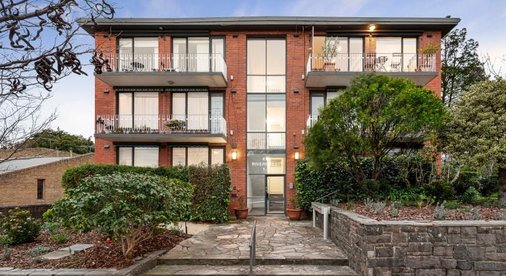
None of that applies evenly. A well-built two-bedroom apartment in a small block in Elwood or Hawthorn has almost nothing in common with a studio in a 400-unit tower, beyond the word apartment. The work is in telling them apart, and it is mostly due diligence on body corporate health, building age, construction quality and levy history.
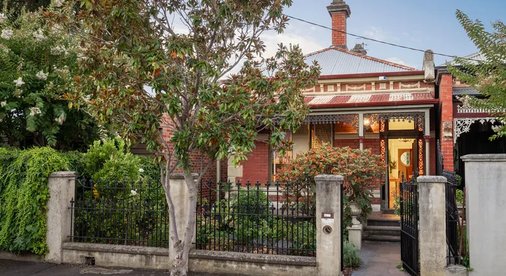
A house on 500 to 600 square metres in an established suburb offers what an apartment cannot: development potential, renovation upside and a genuinely finite supply of comparables. Holding costs are simpler with no body corporate. Tenant demand for outdoor space has stayed strong since 2020.
For buyers priced out of houses in their target suburbs, townhouses sit in between. Land content is the thing to watch. Aim for 200 square metres or more, ideally in a block of two to four rather than a large strata development. A standalone townhouse with no shared walls behaves much like a small house.
Annual costs on an $800,000 Melbourne house at 80 per cent borrowing. The interest line assumes 6.5 per cent, which sits between the RBA average variable rate near 5.9 per cent and the average investor variable rate closer to 7.2 per cent. Sharper investor rates start around 5.85 per cent.
| Expense | Annual cost |
|---|---|
| Mortgage interest | ~$41,600 |
| Council rates | $1,800 to $2,800 |
| Water rates | $800 to $1,200 |
| Landlord insurance | $1,400 to $2,500 |
| Property management (8% plus GST) | ~$2,800 |
| Victorian land tax | $1,500 to $5,000+ |
| Emergency Services Levy | Increased for investment properties from 1 July 2026 |
| Maintenance (1 to 2% of value) | $8,000 to $16,000 |
| Total | $58,000 to $72,000 |
A worked example on averages, not financial advice. Your numbers will differ.
Against rent of roughly $31,000 on a 3.4 per cent gross yield, the shortfall runs $27,000 to $41,000 before any tax effect. From 1 July 2027, on established stock bought after budget night, none of that shortfall reduces your salary income.
Victorian land tax deserves its own attention. The general threshold has been $50,000 of site value since 2024, the lowest in the country, with flat surcharges of $500 and $975 under the COVID Debt Repayment Plan and an extra 0.10 percentage points above $300,000. Those settings run to 30 June 2033 and the 2026-27 State Budget left them unchanged. A site value of $400,000 attracts roughly $1,650. Almost every Victorian investment property now pays something.
Interest-only repayments free up cash flow in the expensive early years. On a $640,000 loan at 6.5 per cent, interest only runs about $3,467 a month against $4,045 for principal and interest. Most investor lending allows five years before it reverts.
The trade is that you build no equity through repayments, so the entire result depends on growth. In a market forecast to fall for another year, that is a heavier bet than it was. Loan structuring, offset accounts and cross-collateralisation all change the calculation, and it belongs with your broker.
Budget for the full monthly shortfall, not the after-tax figure. Costs arrive every month, any tax benefit arrives once a year, and from July 2027 a large part of that benefit disappears on established stock.
If the position consistently costs more than you can carry and the growth is not arriving, that is information. Overcommitment bias is real: having already put a great deal in makes people hold assets they should not. Selling in a flat market is unpleasant. Holding something you cannot afford is worse.
A weak property manager costs more than their fee saves. The signals are slow responses, delayed disbursements, maintenance sitting unactioned and inspection reports copied from last quarter. Ask how many properties each manager handles. Above 200 doors you are a line item. Target agencies where managers carry 80 to 120.
Budget 1 to 2 per cent of value annually for maintenance. That sounds excessive until a hot water system fails, a roof leaks, or the property needs bringing up to Victoria's rental minimum standards, which cover heating, window locks and electrical safety and are among the strictest in the country. Your manager should flag compliance gaps before a tenant does.
Once a property has grown, equity can fund the next deposit. The constraint is rarely equity. It is serviceability. Lenders shade rental income by 20 to 30 per cent when assessing capacity, so each purchase reduces your power for the next one, and the negative gearing change removes a deduction that previously supported borrowing capacity for some investors.
A portfolio does not have to be all Melbourne. Pairing a Melbourne asset with a higher-yielding property interstate can improve aggregate cash flow while keeping growth exposure. Geographic spread also protects against a single state changing its land tax settings again. Each property still has to stand on its own.
The classic failure is a new off-the-plan apartment in an oversupplied tower, bought for the depreciation schedule and the developer incentive, worth less five years later with a doubled body corporate. From 1 July 2027 there is a new version of that mistake, which is buying a new build primarily because it keeps negative gearing. The deduction does not repair a developer margin or thin land content.
The second is stretching to a borrowing limit that only works at a particular interest rate. Buyers who did that in 2021 watched the cash rate move from 0.1 to 4.35 per cent and some were forced to sell at the worst point. Buy with margin.
The third is impatience. Melbourne's long-run average sits near 6 per cent a year for houses, and that average contains years like this one. Property is a seven to ten year hold at minimum. If you cannot sit through the flat and falling years, you will not be there for the others. The investors who do well at this are dull. They buy well-located assets, hold them, pay down debt and ignore the headlines. Under-quoting and auction pressure are easier to resist when your timeline is measured in decades.
Values fell 4.7 per cent over the year to August 2026 and sit about 6.8 per cent below the March 2022 peak. At the same time Melbourne carries the highest gross yield of any major capital, rents grew 4.9 per cent and vacancy tightened to 1.6 per cent. Falling values and improving income are both true. Whether it suits you depends on your holding period and whether you can service the loan without relying on growth arriving early.
Gross yields sit near 3.4 per cent for houses and 5.1 per cent for units, around 4 per cent across all dwellings. Net yield runs roughly 1 to 1.5 percentage points lower, and lower again on an apartment with body corporate fees.
Property held at 7:30pm on 12 May 2026 is grandfathered until sold. For established property bought after that, from 1 July 2027 losses cannot be deducted against salary, though they can be offset against residential property income and carried forward. New builds keep negative gearing. The grandfathering attaches to the holder, so buying a grandfathered property does not pass the treatment to you. The dates, exemptions and what counts as a new build are covered in full separately.
Houses have historically outperformed on growth. Over the last year they did not: houses fell 5.7 per cent against 2.5 per cent for units, and units yield about 1.7 percentage points more. Domain forecasts the same gap continuing to June 2027. A well-selected unit in a strong suburb is defensible, provided the body corporate, building age and levies hold up.
High land content for the price, strong location drivers, scarcity of comparable stock, and appeal to owner-occupiers as well as renters so the exit pool is wide. A below-median entry in a strong suburb generally beats a median entry in a weak one.
Work from net yield. At about 2.5 per cent net on houses, $100,000 a year needs roughly $4 million of unencumbered property. At about 3.5 per cent net on units, closer to $2.9 million. Both are well above the three-property rule of thumb, which assumes a net yield Melbourne houses do not produce.
Excluding the mortgage, budget $14,000 to $30,000 a year on an $800,000 property, covering rates, insurance, management, land tax, the Emergency Services Levy, maintenance and any body corporate. Interest sits on top, roughly $41,600 on a $640,000 loan at 6.5 per cent.
About $222,000 on an $800,000 purchase: a $160,000 deposit, $43,070 in Victorian stamp duty at general rates, conveyancing, inspections, loan setup and a buffer. Under 20 per cent deposit generally adds $10,000 to $25,000 of Lenders Mortgage Insurance.
The market has removed the two things that used to paper over a marginal purchase: reliable growth and a deduction against your salary. What is left is the property, the price and the numbers. That is a harder market to buy carelessly in and a better one to buy carefully in.
If you are weighing a specific property, send me the address and the numbers and I will tell you whether it holds up without either crutch.
This is general information, not financial, tax or investment advice. Figures are worked examples based on market averages as at September 2026. Speak to your accountant and your broker about your own position.
If you’d like to talk it through, we can map out the next steps.
No obligation. Just context.


It all starts with a confidential conversation.



.svg)

.svg)