


A step-by-step guide to buying your first home in Melbourne, covering finance, grants, stamp duty concessions, building your team, property search, due diligence, auctions, offers, and settlement. Every stage in order, with the traps flagged.

Most first home buyers in Melbourne describe the process as mentally and physically exhausting. After 6–11 months of searching, dozens of inspections, and a string of missed auctions, the overwhelm is real.
The process feels opaque because nobody teaches it. Real estate agents work for vendors, not for you. You’ll face pressure tactics, artificial urgency, and conflicting advice from every direction. But with the right sequence, and a clear understanding of where first buyers actually stall, you can handle this without losing sleep or money.
This guide walks through the actual steps in order, flagging the points where costly mistakes happen.
Pre-approval is not a guarantee. It’s a conditional indication from a lender that they’d likely fund you, subject to a satisfactory property valuation and no change in your financial position. Around 50–60% of pre-approvals expire before a purchase is made.
The distinction matters most at auction. At a private sale, you can make your offer subject to finance. At auction, you can’t. If the bank’s valuation comes in lower than the price you paid, you’re responsible for the shortfall and in extremely rare cases, that can mean losing your deposit or facing legal action.
What catches first buyers off guard: small apartments, particularly one-bedroom units with no car park or no external windows in bedrooms, are harder to finance. Some lenders won’t touch them at all. And online borrowing calculators give a theoretical maximum. Lenders assess living expenses, HECS debt, credit card limits, and existing commitments and the gap between what a calculator says and what a lender actually approves is where most first buyers get blindsided.
Talk to a mortgage broker before you start searching. Understand your borrowing ceiling, your comfortable repayment level, and the valuation risk on the type of property you’re targeting.
The FHSS scheme is one of the most underused tools available to first home buyers. It lets you save for a deposit inside your super fund where voluntary contributions are taxed at 15%, which is usually well below your marginal tax rate.
You can contribute up to $15,000 per financial year and $50,000 in total (from 1 July 2017 onwards). When you withdraw, you get back 85% of your before-tax contributions and 100% of your after-tax contributions, plus deemed earnings calculated by the ATO.
Couples can each access their own FHSS savings toward the same property, potentially $100,000 combined.
There are rules to follow. You must request an FHSS determination from the ATO before property ownership transfers to you. Once you request a release, you have 12 months to sign a contract, with a possible 12-month extension. If you don’t buy, you can recontribute the money back into super or keep it and pay FHSS tax.
Worked example: Earning $85,000 a year and salary-sacrificing $15,000 annually for three years gives you $45,000 in eligible contributions. At the 15% super tax rate instead of your marginal rate, you save thousands in tax and the deemed earnings rate has recently tracked above standard savings account returns.
This is a planning-ahead tool, not a last-minute one. Speak to your super fund about whether they support FHSS releases, and factor the FHSS timeline into your buying timeline.
A guarantor loan lets a family member, usually a parent, use equity in their property to guarantee part of your loan. This can reduce or eliminate the need for a full deposit and avoid Lenders Mortgage Insurance (LMI).
The guarantor doesn’t hand you cash. They put their property on the line as security for a portion of your loan. If you default, the lender can pursue the guarantor’s property. This is a real financial risk, not a formality.
Most lenders allow the guarantee to be limited to a specific portion, say 20% of the property value, to cap the guarantor’s exposure. Once you’ve built enough equity (usually reaching 80% loan-to-value ratio), the guarantee can be released.
Both parties should get independent legal advice before signing. Discuss what happens if the guarantor needs to sell their own property. And understand that the guarantee affects the guarantor’s borrowing capacity until it’s removed.
The Victorian FHOG is a $10,000 one-off grant, but it only applies to new homes valued up to $750,000. The home must have never been previously occupied or sold as a place of residence.
This is the detail that catches most first buyers off guard. If you’re looking at an established house or apartment, which most Melbourne first home buyers are, the FHOG doesn’t apply to you. It’s designed for new builds, off-the-plan purchases, and substantially renovated properties.
You must move in within 12 months of settlement and live there as your principal residence for at least 12 continuous months. The grant is paid at settlement if you’re buying, or at the first progress payment if you’re building.
This is where the real savings sit for most first buyers. Unlike the FHOG, the Victorian first home buyer duty exemption applies to both new and established homes.
The thresholds:
These thresholds have not changed since 2017, while Melbourne’s median house price has risen significantly. Staying under $600,000 saves you the most. On a $600,000 property, the exemption is worth roughly $31,000.
You must move in within 12 months and live there for 12 continuous months. Renting out a room can affect your eligibility, and penalties apply if you violate the terms.
Off-the-plan concession: A temporary Victorian concession, extended to 20 October 2026, excludes construction costs from the dutiable value of off-the-plan apartments and townhouses. This applies to all buyers, not just first home buyers. For first home buyers, this can bring a $700,000 off-the-plan purchase back under the $600,000 exemption threshold. It stacks with the FHB duty exemption and the FHOG.
5% Deposit Scheme (Home Guarantee Scheme): From October 2025, this scheme offers unlimited places with no income caps. You buy with a 5% deposit and no LMI. The government guarantees the difference up to 20%. The property price cap in Melbourne and Geelong is $950,000. Available through a broad panel of participating lenders.
Help to Buy: Launched in December 2025 and operational in Victoria. The government contributes up to 40% of the purchase price for new homes or 30% for existing homes, as a shared equity stake. You need as little as a 2% deposit and pay no LMI.
Income caps apply: $100,000 for individuals, $160,000 for couples. The property price cap in Melbourne is $950,000. There are 10,000 places nationally per year. Over 2,300 had already been approved by February 2026.
At the time of writing (March 2026), only two lenders participate: Commonwealth Bank and Bank Australia. CBA is not accepting applications through mortgage brokers, only through its own home lending specialists. More lenders are expected to join by mid-2026.
The important catch: this is not a grant. The government owns a proportional share of your property that fluctuates with its value. If you buy for $800,000 with a 30% government contribution and the property later sells for $1,000,000, the government’s share has grown to $300,000. You can buy back the government’s share over time in minimum 5% increments.
Can you stack these schemes? Yes. A first home buyer purchasing a new $700,000 off-the-plan townhouse could potentially combine the FHOG ($10,000), the off-the-plan concession (reducing duty to zero), and the 5% Deposit Scheme (no LMI), for total savings exceeding $50,000.
Get one before you start searching. A broker can work through lender policies across dozens of institutions, identify every scheme you’re eligible for, and structure your application to stack benefits. The interaction between federal schemes, Victorian concessions, and individual lender products is complex, and getting it wrong means leaving money on the table.
Around 13% of first home buyers regret not using a broker or choosing the wrong one. Red flags: a broker who rushes you into a product without explaining the terms, or one who doesn’t raise the FHSS scheme, Help to Buy, or the 5% Deposit Scheme unprompted.
Engage one as soon as you start making offers. They handle contract review, Section 32 analysis, and settlement coordination. In Melbourne, expect to pay $990–$2,000+.
Don’t use the selling agent’s recommended conveyancer. Referral fees create a potential bias. Your conveyancer should be working exclusively for you.
Book independently, not through the agent’s recommendation. Expect to pay $385–$600+. If you’re buying at auction, the inspection must be done before auction day. There are no subject-to clauses at auction.
The common perception is that Melbourne’s auction-driven market is transparent enough to go it alone. That’s partly true. Auction results are public and the process is open. But it doesn’t protect you from overpaying, missing a red flag, or losing weeks chasing properties that were never within your realistic budget. Those are the gaps where professional guidance pays for itself.
A buyer’s agent can shorten your search by filtering properties against your brief before you spend weekends at inspections that go nowhere.
The question isn’t really whether you can do this alone. Most people could. The question is whether the cost of one avoidable mistake outweighs the cost of having someone in your corner from the start. Know what you don’t know.
Melbourne’s price bands create distinct tradeoffs. Under $500,000, you’re looking at outer growth corridors, newer homes on smaller lots, longer commutes, still-developing infrastructure. The $500,000–$750,000 range is the most competitive segment, where first home buyers and investors compete directly.
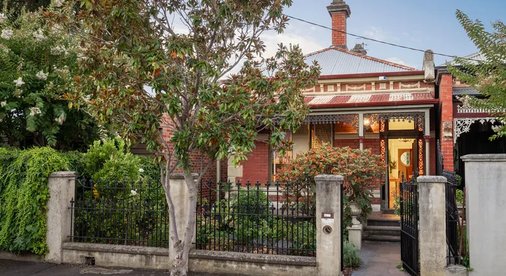
Established vs new build is a real decision. New homes qualify for the FHOG; established homes don’t. But older homes, particularly those built in the 1950s–early 90s, may be sturdily constructed while hiding outdated plumbing, wiring, or asbestos that’s expensive to fix. Recently renovated homes can mask defects with cheap DIY work. Fresh paint and new carpet are not signs of quality.
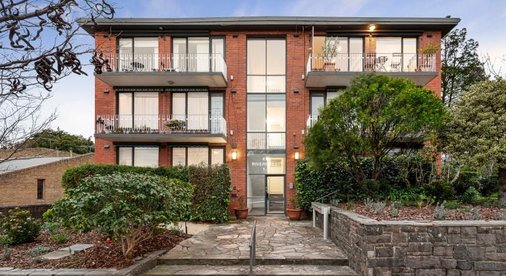
Apartment, townhouse, or house? Frame it as a lifestyle vs investment tradeoff. Apartments offer an entry-level price point but carry body corporate costs and oversupply risk in some corridors. Houses offer land value but stretch budgets. The right answer depends on whether this is a five-year stepping stone or a decade-long home and most first buyers don’t think about that distinction early enough.
Search fatigue is real. Most searches easily take 6–11 months. Set boundaries: a clear "must-have" vs "nice-to-have" list, a maximum number of inspections per week (just a hint, 10 properties on a Saturday is madness, max 4–5!), and defined walk-away criteria. Take breaks when you’re burnt out. There will always be another property.
Off-market stock is less common in Melbourne’s auction-driven culture than in some other markets, but it exists, particularly in cooler conditions or through established agent relationships.
To access pre-market listings, which is where the bulk of not-advertised stock exists, you need relationships with local agents in your target suburbs. Use ratemyagent.com to identify active agents. Call weekly, remind them of your criteria and that you’re pre-approved. Register for new listing alerts on every major portal.
Bring a checklist. Look past the staging and check the bones of the property.
Red flags in established homes: retaining walls in poor condition, signs of water damage, old electrical panels. In apartments: cladding issues, high body corporate fees, no external windows in bedrooms, which also creates finance difficulty.
Don’t make decisions during the inspection. Review your notes later with a clear head. Take photos if permitted (ask for forgiveness rather than permission). Talk to neighbours if the opportunity presents itself. If it doesn’t, don’t be shy and knock on their door, that’s how we do it.
B&P inspections are visual only. Inspectors can’t get under the house, into the roof, or behind walls in many cases. Reports are often filled with disclaimers limiting the inspector’s liability, and a common complaint is that the inspector only spent 30 minutes on-site.
Some agents will tell you that you can’t attend your own inspection. Push back. You have the right to be there, and being present lets you ask questions in real time.
Book from a reputable firm, not whoever the agent recommends. Consider paying extra for thermal imaging, which can detect moisture behind walls and termite activity that a visual inspection misses. If major defects are found, negotiate a price reduction or walk away.
At auction, B&P must be done before you bid. There are no subject-to clauses. This means you may spend $400–$600 on an inspection for a property you don’t win, and that’s the cost of doing business at Melbourne auctions.
A Section 32, formally the Vendor’s Statement, is a mandatory disclosure document in Victoria. It tells you what you’re actually buying.
The key sections, in order of importance: title details (lot number, owner, mortgages, caveats, restrictive covenants), title plan (do the boundaries match what you expect?), zoning, rates and charges, building work done in the last seven years (check for unpermitted work), and for apartments, Owners Corporation fees, special levies, and building defects.
Don’t attempt to read a 92-page contract yourself. Get your conveyancer or solicitor to review it, that’s what you’re paying them for. And be aware that agents sometimes write special conditions into contracts that carry no legal weight. Unless you hold or are eligible for professional indemnity insurance for legal reviews, you must get this done professionally.
Questions for your conveyancer: Are there restrictive covenants? Is building work compliant with permits? For apartments, are there upcoming special levies flagged in the Owners Corporation minutes? What are your cooling-off period rights?
The selling agent works for the vendor. Their job is to get the highest price in the shortest time. Once you internalise that, their behaviour makes more sense.
Common tactics: telling you there’s another unconditional offer, nearly every agent says this. Using your offer as ammunition to get a competing buyer to bid higher. Creating artificial urgency with "you’re taking too long". Going silent after receiving your offer while they shop it around. Underquoting the price range by 10–20% to attract more buyers to open inspections.
How to respond: stand firm on your conditions. If they claim another offer, ask for a counter-offer rather than bidding against a phantom. Put a time limit on your offer, 24 to 48 hours, so they can’t shop it indefinitely. Communicate through your solicitor where possible, not just verbally with the agent.
Recognise urgency tactics for what they are. It’s fine to walk away from a property that doesn’t feel right. Don’t let an expiring lease or a sense of FOMO force a bad decision.
For a private sale, a conditional offer is the standard recommendation for first home buyers: subject to finance, subject to building and pest inspection, subject to satisfactory contract review.
Victoria has a 3-day cooling-off period for private sales, though exercising it costs 0.2% of the purchase price.
Agents will push hard for an unconditional offer. Only consider going unconditional if your broker says you are "auction ready" and you are certain the property has been priced correctly and you’ve already completed a B&P inspection.
The risk of going unconditional without these safeguards: if finance falls through or the bank’s valuation comes in low, you lose your deposit and may be sued for the difference. Some first buyers lose properties because other buyers go unconditional. That stings, but it’s better than being locked into a property you can’t afford.
Melbourne runs on auctions. If you’re buying here, you need to be ready for one.
Your finance must be solid. Not pre-approval, but a clear indication from your broker that the lender will fund this specific type of property at this price range. Around 99.9% of post-auction valuations come back at the purchase price, but if yours doesn’t, you’re on the hook for the shortfall.
B&P and contract review must be completed before auction day. There are no cooling-off periods and no subject-to clauses.
Before your first auction: attend several as an observer. Watch how auctioneers work. Notice the pressure. Set your absolute ceiling in advance. Write it down, tell your partner, and stick to it. Auctioneers have one objective: to drive competition and push the price higher. When you’re at your limit, don’t get pulled into "just one more bid."
If the property passes in (doesn’t reach reserve), you can negotiate directly with the vendor afterwards. If you win, you pay a deposit immediately and exchange contracts on the spot. The property is sold, the sticker goes up, no cooling off, no subject to.
The important distinction here is this: wherever a property sells within 3 clear business days on either side of the publicly advertised auction date, these auction conditions apply. Be aware of this. If you sign on the Wednesday before or the Wednesday after a weekend auction, you don’t have cooling-off rights and the contract is as unconditional as if the home sold under the hammer.
Research comparable sales in your target suburb. Look up what similar properties on the same street or in the same block have sold for recently.
Understand that quoted price ranges are vague and sit 10–20% below the actual reserve price. This is underquoting, and while it’s against the rules, it remains common in Melbourne. Property valuation estimates from portals can vary by $80,000 or more from actual sale prices.
Post-purchase regret is normal. Most buyers worry they’ve overpaid. The long-term perspective helps. Whatever you feel you’ve overpaid now tends to become minor compared with the gains over the following years.
Once your offer is accepted (private sale) or you win at auction, you sign the contract and pay a deposit, typically 10% of the purchase price, but this can be negotiated. If you are planning on bidding at an auction and cannot pay the full 10%, you MUST confirm this with the agents before the start of the auction. In a private sale, you have a 3-day cooling-off period in Victoria, though exercising it costs 0.2%.
Your conveyancer handles the transfer process, lodges the stamp duty forms, and coordinates with the vendor’s legal team.
Settlement typically runs 30–90 days after exchange. During this period: arrange building insurance. Most contracts require it from exchange. Your lender will complete the formal loan approval and property valuation.
Hidden costs to budget for: Beyond the purchase price, expect $15,000–$30,000 in additional costs. Conveyancing fees, B&P inspections, loan application fees, mortgage registration, building insurance, moving costs, and immediate repairs. Then factor in the ongoing costs: council rates, water rates, insurance, and maintenance. Set aside roughly 1% of the property value annually and you’re in a very safe space.
If you need a settlement extension, the vendor may charge penalty interest. Keep your conveyancer across any delays early.
Do a pre-settlement inspection. Check the property is in the condition agreed in the contract. Common issues: property left dirty, junk in the shed, agreed repairs not completed.
Your conveyancer handles the financial settlement. You pick up the keys.
Buyer’s remorse is normal. Old homes will reveal maintenance needs you didn’t see during inspection. Apartments may surface body corporate issues. None of this means you made a bad decision.
Your first home is about getting into the market. It doesn’t need to be perfect. You can upgrade in 5–10 years once you’ve built equity. If you want to start that conversation now, an initial review costs nothing and sets you up properly from day one.
The sequence is: get your finance sorted (pre-approval, FHSS, deposit), build your team (broker, conveyancer, inspector), define your search criteria, inspect properties, do due diligence (B&P, Section 32), make an offer or bid at auction, exchange contracts, then settle. Most first buyers stall at the finance stage or the offer stage, both are covered in detail above.
It depends on which scheme you use. The 5% Deposit Scheme lets you buy with 5% and no LMI with unlimited places and no income cap. Help to Buy requires just 2%, though it comes with a shared equity arrangement. Without any scheme, most lenders want at least 5–10%, but you’ll pay LMI if you have less than 20%.
A one-off $10,000 grant for new homes (never previously occupied) valued up to $750,000. Applied for through your lender at settlement. It does not apply to established homes. This catches most first buyers by surprise.
If you’re a first home buyer purchasing a property up to $600,000, you pay zero stamp duty. Between $600,001 and $750,000, you receive a concession on a sliding scale. Over $750,000, no first home buyer relief applies. These thresholds cover both new and established homes.
A federal scheme launched in December 2025. The government contributes up to 40% (new homes) or 30% (existing homes) of the purchase price as shared equity. You need a 2% deposit and pay no LMI. Income caps apply. At the time of writing, only two lenders participate, with more expected by mid-2026.
Yes. You can stack the FHOG, stamp duty exemptions, the 5% Deposit Scheme, and the off-the-plan concession in many cases. The combined savings for an eligible new home buyer can exceed $50,000. A mortgage broker can map out which combinations apply to your situation.
Plan for $15,000–$30,000 beyond the purchase price: conveyancing ($990–$2,000), B&P inspections ($385–$600), loan fees, mortgage registration, insurance, moving costs, and immediate repairs. Ongoing, budget for council rates, water rates, insurance, and maintenance, roughly 1% of property value per year.
This depends on whether your first home is a stepping stone or a long-term base. Apartments offer entry-level pricing but carry body corporate costs and oversupply risk in certain corridors. Houses offer land value growth but stretch budgets. Townhouses often sit in the middle. Consider your 5–10 year plan, not just what you can afford today.
If you’d like to talk it through, we can map out the next steps.
No obligation. Just context.


It all starts with a confidential conversation.




.svg)

.svg)