


Armadale (3143) sits between Prahran's noise and Toorak's pomp: small, walkable, school-anchored, and one of the most consistently liveable suburbs in inner south-east Melbourne. A buyer's-advocate profile covering High Street, the two Frankston-line stations, the schools, the three sub-markets, and who the suburb suits.

Armadale is the small inner-south suburb that sits between Prahran's noise and Toorak's pomp. Postcode 3143, City of Stonnington, eleven minutes to the CBD by train, and one of the most walkable suburbs in inner south-east Melbourne. The suburb is small enough that the Armadale brief is quickly definable: High Street, the two stations within walking distance, the tree-lined residential streets in between, and the schools.
The positioning runs against neighbours. Toorak (immediately north) carries the prestige tier and the price ceiling. Malvern (immediately east) carries the slightly larger family-house tier and the second commercial spine on Glenferrie Road. Prahran and Windsor (immediately west and north-west) carry the nightlife, density, and noise. Armadale sits in the middle, runs more affordable than Toorak for equivalent stock, more contained than Malvern, and substantially quieter than the Stonnington suburbs to the west.
Three things define the area's identity. High Street is the suburb's commercial spine, repositioned over recent years as Melbourne's premier fashion and bridal precinct. The two-station walking access (Armadale Station and Toorak Station, both technically in Armadale, less than a kilometre apart on the Frankston line) is one of the strongest commute positions in the south-east. The school cluster (Lauriston Girls', King David School's Orrong campus, Armadale Primary, plus access to the broader Stonnington private-school network) anchors a meaningful share of the family-buyer demand. Each shapes a section below.
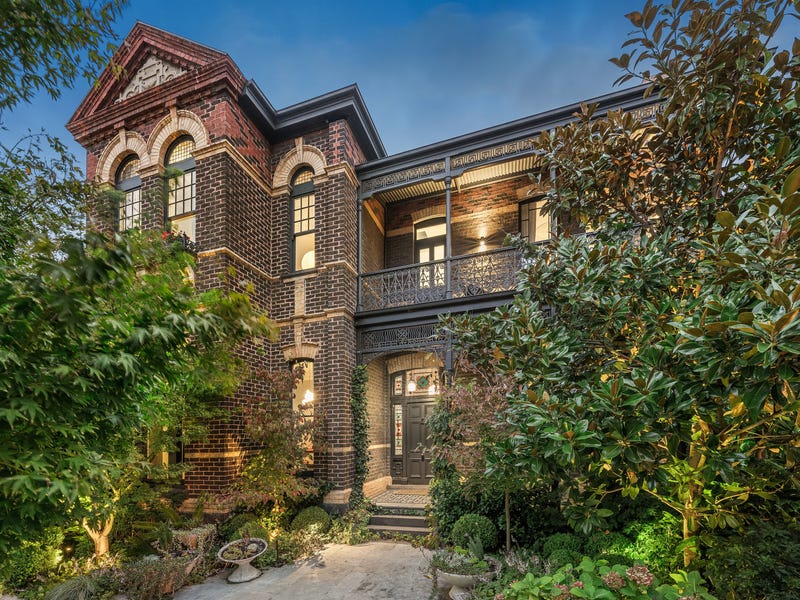
Three patterns dominate the residential fabric.
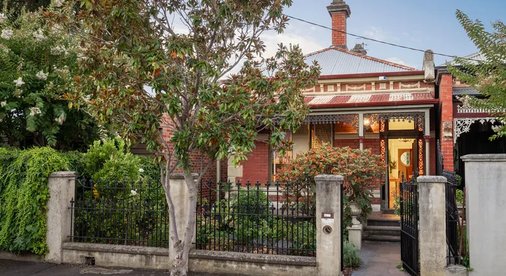
The heritage residential precinct centred on Beatty Avenue, Densham Road, Munro Street, Rose Street, Royal Crescent, and Watson Street carries the suburb's largest concentration of period housing. Late Victorian, Edwardian and Federation single- and double-fronts, and substantial Italianate and Federation Queen Anne homes on the streets running between Toorak Road and High Street. Heritage overlays cover most of the period stock. Land sizes range from modest single-fronts to substantial mansion-tier holdings on the streets adjacent to the Toorak boundary.
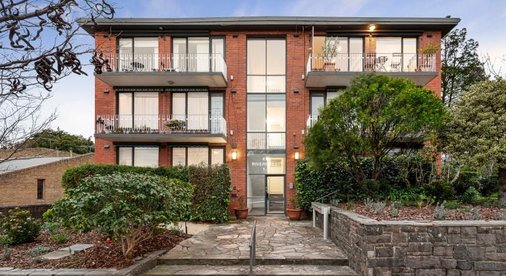
The second pattern is the Art Deco and inter-war apartment stock concentrated along Dandenong Road, Orrong Road, and the streets running off them. Two- to four-storey blocks, often with original detailing intact, frequently in heritage-protected streets. The Art Deco apartment market in Armadale is one of the more architecturally distinctive.
The third pattern is the period townhouse and small terrace stock on the quieter residential streets. Streets like Denbigh Road carry single-fronts on small blocks at substantially better value than equivalent stock north of Toorak Road. Land sizes are modest. Renovation activity is consistent.
What the area doesn't have at scale: bayside-corridor block sizes, comparable contemporary apartment density to Caulfield or South Yarra, or genuinely affordable entry-tier stock at any sub-market.
High Street, running east-west through the suburb between Orrong Road and Kooyong Road, is the area's defining commercial feature and one of the few Melbourne streets that has noticeably changed character in recent years.
The strip carries Melbourne's densest concentration of independent fashion boutiques, designer label stores, bridal ateliers (Raffaele Ciuca, Karen Willis Holmes, Ríva Bridal, Luci Di Bella among others), gourmet food emporiums, and a strong cafe layer. The High Street Armadale Business Association runs precinct events including Fashion After Dark, an evening shopping activation that uses the strip's heritage frontages.
Cafe institutions on High Street include Moby 3143 with its rooftop brunch, High Society, Small Wins (formerly Nine Yards), and 8Days, the coffee-focused café and roastery. Lune Croissanterie also runs a High Street store. Around the corner, Mammoth sits on the Malvern Road and Beatty Avenue corner near Toorak Station, Coin Laundry sits just off High Street near Armadale Station, and Hank's Bagelry on Beatty Avenue handles New York-style bagels. Albert's Wine Bar, tucked behind Kings Arcade on Morey Street, runs as the area's main neighbourhood evening drinking option, with a small-batch wine list and seasonal share plates.
The Orrong Hotel at 709 High Street, the suburb's heritage pub, reopened in 2022 after extensive renovation. The reopening is locally regarded as the most significant hospitality moment of the past five years.
Beatty Avenue, near Toorak Station, runs as a smaller secondary commercial strip with a recent council-approved permanent outdoor dining offering.
Three schools in or immediately adjacent to Armadale shape the area's family-buyer demand.
Lauriston Girls' School (38 Huntingtower Road) is the area's flagship independent girls' school. ELC to Year 12, day school, established 1901. Long-established academic reputation and one of the most consistent reasons given by Armadale family buyers for choosing the postcode.
The King David School operates its Magid Campus (Years 6 to 12) at 517 Orrong Road, with its junior school nearby on Dandenong Road. Progressive Jewish day school covering early learning to Year 12, with the Magid Campus serving the older students. Armadale's location within the broader inner-south Jewish community makes the proximity to King David and the wider Jewish school network (Bialik, Mount Scopus, Yeshivah-Beth Rivkah) a meaningful factor for some buyers.
Armadale Primary School (9-23 Densham Road) is the local government primary. Performs well on state metrics and runs as the practical state-school option for Armadale-zoned addresses.
Beyond these three, Armadale buyers regularly consider De La Salle College in Malvern, St Kevin's Heyington campus in Toorak, Caulfield Grammar's main campus, and the broader inner-east independent network.
The transport position is one of Armadale's underrated strengths. Two stations sit within walking distance of most addresses: Armadale Station and Toorak Station, less than a kilometre apart. CBD travel time runs eleven to fourteen minutes off-peak depending on which of the two stations you use. The Frankston line through this stretch is one of the more reliable in the network.
Trams along High Street run to Glen Iris east and to the CBD and University of Melbourne west. Trams along Wattletree Road and Dandenong Road run to Malvern East and to the CBD via St Kilda Road. From Armadale's western edge, Chapel Street trams connect Windsor, Prahran, South Yarra, Richmond and Balaclava. Local buses fill the gaps to surrounding suburbs.
By car, Toorak Road, Dandenong Road, Orrong Road, and Kooyong Road run as the major arterials around the suburb's perimeter. Traffic is congested through the suburb, particularly during peak hours and around school drop-off and pick-up. Permit zones cover most residential streets and on-street parking is genuinely limited.
Three things buyers genuinely ask about.
The 'sterile' question. Armadale is quiet, clean, family-oriented, and short on nightlife. Buyers who want vibrancy in their immediate suburb should look elsewhere. Buyers who want peace, school access, and walkable shopping with no expectation of nightlife are well matched.
The Toorak comparison. Many Armadale buyers spent time considering Toorak first. The price gap between equivalent stock in 3143 and 3142 is meaningful and runs in Armadale's favour. The lifestyle gap is narrower than the price gap suggests, since both suburbs share most of the practical amenity (High Street is in Armadale; the Toorak Village strip is the only meaningful 3142-only commercial precinct).
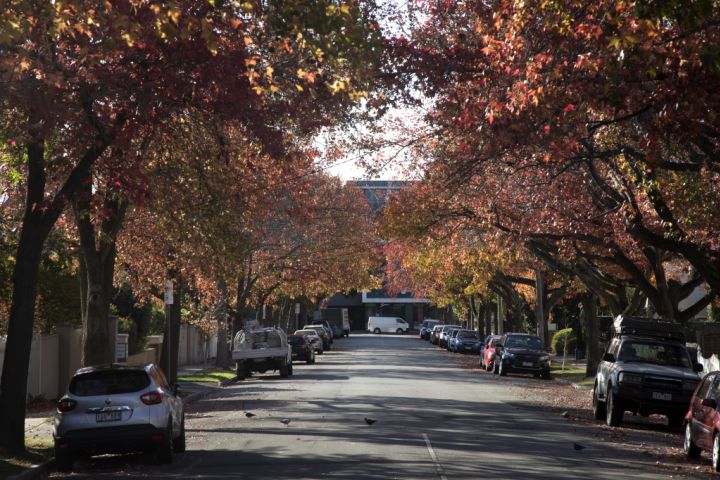
Four signals worth unpacking.
Signal one: tenure mix. The owner-occupier share is high for the inner-south corridor, particularly in the period-house pockets. Apartments along Dandenong Road and Orrong Road carry a higher renter share, but the suburb overall runs more like Brighton or Hampton than like Prahran in tenancy mix.
Signal two: hold periods. Armadale's period-house stock turns over slowly. Long-tenure families, downsizers within the suburb, and inheritance transactions account for a meaningful share of activity. Off-market activity is genuine but lower-intensity than Brighton.
Signal three: the High Street effect. The recent commercial repositioning of High Street has measurably improved the suburb's profile with non-local buyers, particularly buyers from the inner-east and from interstate.
Three observable sub-markets in Armadale.
Period-house heritage precinct. The streets around Beatty Avenue, Densham Road, and the broader heritage precinct between Toorak Road and High Street. The premium tier of the suburb, with Toorak-adjacent streets running closest to the prestige ceiling.
Apartments and Art Deco walk-ups. The Dandenong Road and Orrong Road frontages plus the streets immediately around. Premium pricing for renovated Art Deco, more modest pricing for plainer mid-century stock. Building quality varies substantially block-to-block.
Townhouse and small-terrace pockets. The streets like Denbigh Road, where small heritage townhouses and single-fronts trade at meaningful value relative to the heritage precinct. Worth specific attention from buyers wanting freehold ownership at the lower end of the suburb's range.
A practical pricing note: the gap between an Armadale period house north of High Street (toward Toorak Road) and a like-for-like Armadale property south of High Street (toward Dandenong Road) is real and reflects both Toorak proximity and traffic-frontage exposure. Buyers should walk the address at peak hour before committing.
Families with school-aged children, particularly those targeting Lauriston, King David, or one of the Stonnington-corridor private schools. The single clearest match for the Armadale brief.
Professionals at the senior career stage who want the Frankston-line commute, walkable High Street amenity, and a quieter residential character than Prahran or South Yarra.
Downsizers from larger inner-east houses or from Toorak who want a smaller heritage residence or a renovated Art Deco apartment near High Street.
Long-term holders interested in heritage-protected period stock with structurally limited supply growth and consistent buyer demand.
Buyers prioritising house-and-amenity over postcode-prestige who would otherwise be priced out of Toorak. The Armadale-versus-Toorak decision saves real money for many briefs.
The area doesn't suit buyers wanting nightlife and density (Prahran or South Yarra are nearby and answer that brief better), buyers wanting a multicultural neighbourhood, or buyers underestimating the school-driven character of the local market and the proximity premium attached to walking-distance addresses to Lauriston or King David.
If you take one practical thing from this profile: the walking-distance access to two Frankston-line stations is one of the most reliable amenity premiums in the suburb's pricing. Addresses within five minutes' walk of either Armadale Station or Toorak Station carry a premium that runs consistently across the period-house and apartment markets. The premium shows up in offers and in final clearance prices.
Brief discipline matters. The three sub-markets behave differently. Buyers wanting a heritage period house have very little overlap with buyers wanting an Art Deco apartment, which has very little overlap with buyers wanting a renovated townhouse on a quieter street. We've helped clients across all three sub-markets and the work is in matching the brief to the right pocket and the right building.
For buyers comparing the wider corridor, the Malvern, Windsor and Prahran, and Caulfield set out the trade-offs east, west, and south.
If you’d like to talk it through, we can map out the next steps.
No obligation. Just context.

It all starts with a confidential conversation.




.svg)

.svg)