


Stamp duty is the cost that derails more Melbourne property purchases than any other single factor. This guide shows you exactly how it works in Victoria, how to calculate it accurately, how to use exemptions and concessions strategically, and how to avoid the mistakes that catch Melbourne buyers every year.
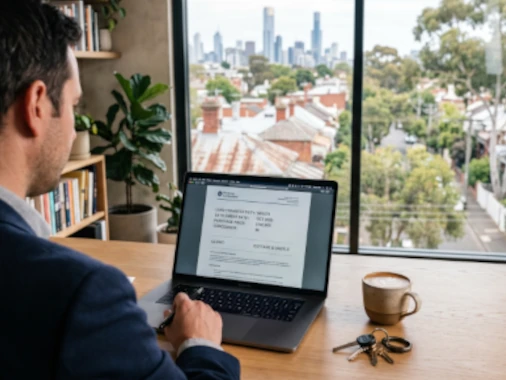
You've saved $80,000 for a deposit. You're pre-approved. You find the right $750,000 property in Melbourne's middle ring. Then your conveyancer tells you that you owe $40,070 in land transfer duty, due at settlement, in cash, on top of everything else.
Stamp duty is the cost that derails more Melbourne property purchases than any other single factor. It's poorly explained, riddled with threshold traps, and calculated differently depending on who you are and what you're buying. Online calculators disagree with each other by thousands of dollars. First home buyer concessions vanish at price points that barely cover a two-bedroom apartment in the inner suburbs. And conveyancer errors, the kind that cost buyers $20,000 to $50,000, show up in property forums with alarming regularity.
This guide shows you exactly how stamp duty works in Victoria, how to calculate it accurately, how to use exemptions and concessions strategically, and how to avoid the mistakes that catch Melbourne buyers every year.
Victorian stamp duty, officially called land transfer duty under the Duties Act 2000, is calculated on a progressive sliding scale. The State Revenue Office Victoria (SRO) sets the rates, and they've applied to all contracts entered into on or after 1 July 2021. This is not tax advice.
Here's the general rate table for non-principal-place-of-residence transfers:
| Dutiable value | Rate |
|---|---|
| $0 to $25,000 | 1.4% of the dutiable value |
| $25,001 to $130,000 | $350 + 2.4% of amount over $25,000 |
| $130,001 to $960,000 | $2,870 + 6% of amount over $130,000 |
| $960,001 to $2,000,000 | 5.5% of the full dutiable value |
| Over $2,000,000 | $110,000 + 6.5% of amount over $2,000,000 |
That $960,001 to $2,000,000 bracket catches people off guard. It's not marginal. The 5.5% applies to the entire property value, not just the amount above $960,000. A $961,000 property attracts $52,855 in duty.
Worked examples at common Melbourne price points:
| Purchase price | Approximate duty |
|---|---|
| $600,000 | ~$31,070 |
| $750,000 | ~$40,070 |
| $900,000 | ~$49,070 |
| $1,000,000 | ~$55,000 |
| $1,500,000 | ~$82,500 |
If the property is your principal place of residence and worth $550,000 or less, lower rates apply. The $130,001 to $440,000 bracket drops to 5% instead of 6%. Above $550,000, general rates apply regardless of whether you plan to live there.
Multiple bank calculators show different stamp duty amounts for the same property. One buyer reported checking CommBank, Macquarie, Westpac, ANZ and NAB for a $3.5 million property and getting five different figures, with discrepancies above $6,000.
The problem is that bank calculators are built for convenience, not precision. Most miss the premium duty rate above $2 million, don't account for foreign purchaser surcharges, and can't handle the concession phase-outs that apply to first home buyers between $600,000 and $750,000.
Use the SRO Victoria official calculator as your source of truth. It was last updated in February 2026 and accounts for all current rates, concessions and surcharges.
Duty is charged on the dutiable value of the property, the higher of the purchase price or the market value at the date of the contract. This matters more than most buyers realise.
If you negotiate a $680,000 purchase on a property the SRO believes is worth $720,000, they can assess duty on $720,000. The SRO has the power to challenge your valuation, and buyers on property forums report receiving reassessment notices two years after settlement.
Even purchases from family members at below-market prices attract duty on the full market value. The only way to dispute an SRO valuation is with an independent valuation and evidence of comparable sales.
Eligible first home buyers pay zero stamp duty on properties up to $600,000 in Victoria. The rules are straightforward but strict:
You must be a natural person, not a company or trust. You must be an Australian citizen, permanent resident, or New Zealand citizen holding a special category visa. Neither you nor your spouse or domestic partner can have previously owned residential property anywhere in Australia. You must move in within 12 months of settlement and live there for at least 12 continuous months.
This applies to both new and established homes. For vacant land, the threshold is $400,000, and you must build within 36 months.
The exemption is separate from the First Home Owner Grant, a $10,000 cash payment available for new homes up to $750,000. Combined, an eligible first home buyer purchasing a $580,000 new-build apartment could save over $30,000 in duty plus receive $10,000 in grant money.
Between $600,000 and $750,000, the stamp duty concession for first home buyers reduces on a sliding scale. The formula is: concession = full duty x (($750,000 minus purchase price) / $150,000).
| Purchase price | Approximate duty (FHB) | Saving vs full rate |
|---|---|---|
| $600,000 | $0 | ~$31,070 |
| $650,000 | ~$11,357 | ~$22,713 |
| $700,000 | ~$24,713 | ~$12,357 |
| $740,000 | ~$36,839 | ~$2,631 |
| $750,000 | ~$40,070 | $0 |
Every $10,000 above $600,000 costs roughly $2,000 to $3,000 in additional FHB duty on top of the extra purchase price, with the penalty increasing at higher price points.
Above $750,000, first home buyers pay the same stamp duty rates as investors. There is no concession, no discount, nothing.
A first home buyer who purchased in Melbourne in 2014 might have paid $5,000 to $10,000 in stamp duty on a median-priced house. In 2026, with Melbourne's median house value sitting at approximately $983,000, the exemption threshold of $600,000 barely covers a one-bedroom apartment in the inner suburbs or an entry-level house in the outer growth corridors.
Many first home buyer couples deliberately constrain their budget to $750,000 to stay inside the concession zone. The trade-off is real. It often means compromising on location, size or condition to avoid a $40,000 duty bill.
When you buy land and build a new home, stamp duty only applies to the land component. The construction cost is excluded because it's a new build. GST applies to the building contract instead.
Example: A $750,000 house-and-land package with $300,000 land and $450,000 build attracts duty on $300,000 only, approximately $10,070 for a non-FHB buyer. An eligible first home buyer pays zero duty on that land value.
The conditions: you must sign a separate building contract, and construction must be completed within 36 months. This is one of the most effective legal strategies for reducing stamp duty in Melbourne's growth corridors, suburbs like Clyde, Tarneit, Wollert and Mickleham where land-and-build packages are common.
Victoria's temporary off-the-plan concession is one of the most generous stamp duty relief measures in Australia. For contracts signed between 21 October 2024 and 20 October 2026, buyers can deduct post-contract construction costs from the dutiable value, reducing stamp duty significantly.
This applies to off-the-plan apartments, townhouses and units. It's available to all buyers, not just first home buyers. Investors, owner-occupiers, companies and trusts all qualify, provided the property is part of a strata subdivision. The concession was extended following a $61 million allocation in the 2025-26 Victorian Budget.
Average savings sit at approximately $24,500 per purchase. On a $700,000 off-the-plan apartment where $400,000 represents post-contract construction value, duty is calculated on $300,000 rather than $700,000.
Separate from the temporary measure, Victoria has a permanent off-the-plan concession. It calculates duty on the land value only, excluding the building or construction component, at the time the contract is signed.
For principal place of residence purchases, this can save $10,000 to $50,000 depending on the land-to-building split. Investment purchasers get a reduced version of the concession.
The important detail: this concession is not automatic. You must apply through the SRO at settlement, and the contract must be entered into before the certificate of occupancy is issued. Buyers who miss the application deadline forfeit the concession entirely.
Off-the-plan purchases carry risks that established property buyers don't face. Construction delays can push settlement two to three years beyond the contract date. In that time, your circumstances may change, and your exemption eligibility with them.
Buyers describe signing contracts as eligible first home buyers, only to lose that status before settlement due to marriage, inheritance or a change in residency. One buyer reported being contractually locked in to a purchase while owing $30,000 in duty they hadn't budgeted for, after rule changes mid-contract lowered the exemption threshold.
Bank valuations at settlement can also come in $30,000 to $60,000 below the contract price on off-the-plan properties, creating a cash shortfall crisis separate from the stamp duty issue.
Investment properties attract the general land transfer duty rates with no concessions. There is no principal place of residence discount, no first home buyer relief, and no sliding scale.
A $900,000 investment property in Victoria attracts $49,070 in duty, the same amount regardless of whether your deposit is 10%, 20% or 50%. Deposit size has no effect on stamp duty.
Stamp duty is the one-off hit. The recurring one is Victorian land tax, which applies from $50,000 of site value and is assessed every year you hold the property. The two are worth modelling together before you commit, because between them they decide whether a deal works more often than the purchase price does.
Anyone classified as a "foreign person" under the Duties Act 2000 pays an additional 8% Foreign Purchaser Additional Duty on top of standard rates. That classification catches more people than you'd expect.
A "foreign person" includes anyone on a temporary visa: work visas, bridging visas, temporary entry permits. It applies even if you're married to an Australian citizen and purchasing jointly. The surcharge is calculated on the full property value.
SRO audits can arrive two or more years after settlement. Forum accounts describe couples receiving letters demanding $50,000 in additional duty plus $10,000 in penalties, long after they assumed the purchase was settled. The relevant legislation, sections 104J and 104L of the Duties Act, offers no exceptions for spousal relationships.
Couples where one partner is on a temporary visa often sign contracts expecting permanent residency to arrive before settlement. If it doesn't, the 8% surcharge applies to the full property value.
There is no leniency from the SRO on timing. No payment plans. No retroactive adjustments once PR is granted.
The safer approaches: delay settlement until PR is confirmed, or structure the purchase in the citizen partner's name only. Both options carry their own financial and legal implications. Talk to your conveyancer before signing.
Victoria's Windfall Gains Tax took effect on 1 July 2023 and applies when government rezoning increases a property's value by more than $100,000.
The tax rates are steep. For value uplifts between $100,000 and $500,000, the rate is 62.5% on the amount above $100,000. For uplifts of $500,000 or more, the rate is 50% on the total uplift.
Example: Land rezoned with a $300,000 value uplift attracts WGT of $125,000, calculated as ($300,000 minus $100,000) x 62.5%.
The tax is charged at the point of rezoning, not at sale. Landowners can defer payment for up to 30 years, but interest accrues at the 10-year Treasury Corporation of Victoria bond rate.
For buyers, the practical impact is this: if you're purchasing recently rezoned land, the seller has likely factored WGT into their asking price. And if WGT remains unpaid, it becomes a first charge on the land, ranking ahead of any existing mortgage. Residential land up to 2 hectares is exempt from WGT.
From 1 January 2025, the Vacant Residential Land Tax applies to all residential land in Victoria left vacant for more than six months in the preceding calendar year, not just inner Melbourne. From 1 January 2026, VRLT also applies to unimproved residential land in metropolitan Melbourne that has remained undeveloped for at least five years.
The rate is progressive: 1% in the first year, 2% in the second consecutive year, 3% in the third and beyond.
This is separate from stamp duty. It's an annual holding tax, and it sits alongside ordinary land tax, which now applies from $50,000 of site value. Both affect your total cost of ownership, particularly for investors holding vacant land or unoccupied properties.
For the vast majority of settlements handled through PEXA, duty is paid automatically at settlement. It's not something you can defer to 30 or 90 days later. Your conveyancer manages the lodgement, but you need to have the funds available.
If settlement doesn't occur within 30 days of the contract date, the duty may become payable before settlement, adding another layer of cash flow complexity for buyers with extended settlement periods.
Late payment attracts penalty tax and interest. If the SRO discovers false or misleading information on your duties form, you'll owe any unpaid duty plus additional penalties.
Stamp duty isn't the only government charge due at settlement. Budget for all of these:
| Cost | Approximate amount |
|---|---|
| Land transfer duty | Varies (see rate table) |
| Land transfer registration fee | ~$1,500 to $2,500 |
| PEXA settlement fee | ~$132 |
| Mortgage registration fee | ~$130 |
| Pro-rata council rates | Varies |
| Pro-rata water rates | Varies |
| Pro-rata owners corporation fees | If applicable |
Example: A $750,000 property purchase might total ~$40,070 in duty + ~$2,500 in fees + ~$1,000 in rate adjustments = approximately $43,500 due at settlement, on top of your deposit.
Generally, no. Stamp duty is a separate cost that sits on top of the property's value, and banks lend against the property value, not the property value plus government charges.
A $700,000 property with a 10% deposit means a $630,000 loan at 90% LVR. Adding $33,000 in stamp duty to the loan pushes your total borrowing to $663,000, an effective LVR of 94.7%. That triggers Lenders Mortgage Insurance, which could add another $8,000 to $12,000 to your costs.
Some lenders offer personal loans for stamp duty at higher interest rates. But the practical reality is this: you need stamp duty saved separately, in cash, before you buy.
Most buyers set their auction limit based on what they can borrow plus their deposit. Few factor in how stamp duty scales with each bid increment.
Bidding from $700,000 to $750,000 doesn't just add $50,000 to the purchase price. It adds approximately $2,500 in extra stamp duty. For a first home buyer, that same jump can trigger the loss of the entire concession, adding $15,000 or more in duty on top of the higher price.
Build a stamp duty table for your target price range before auction day. Know exactly what each $10,000 increment costs in total, purchase price plus duty combined.
Crossing $600,000 costs approximately $31,000 in lost exemption plus the duty that now applies. Crossing $750,000 eliminates the remaining concession entirely.
The maths is brutal at the margins. A $599,000 property costs a first home buyer $0 in duty. A $601,000 property costs approximately $208. That's a $2,000 increase in purchase price creating a $208 stamp duty bill from nothing.
At $750,000 versus $751,000, the concession drops to zero and the buyer pays full-rate duty, approximately $40,130.
Set your auction limit $20,000 to $30,000 below any threshold to give yourself a buffer against auction fever.
Only if the SRO accepts your negotiated price as genuine market value. If the discount seems unrealistic, say a $680,000 purchase on a property comparable sales suggest is worth $750,000, the SRO can reassess duty on the higher figure.
To defend a below-market purchase price, you'll need: an independent valuation, evidence of comparable sales in the area, and documentation of the contract terms that justify the discount. Your conveyancer can advise on what the SRO is likely to accept.
This happens more often than it should. The conveyancer fails to tick the FHB box on the Digital Duties Form or doesn't submit the form to the SRO before settlement. The buyer pays full-rate duty and then spends 6 to 12 months chasing a refund through the SRO.
How to avoid it: Confirm with your conveyancer that the DDO has been submitted to the SRO at least two to three weeks before settlement. Ask for the SRO reference number.
Off-the-plan contracts with 12 to 24 month settlement periods are vulnerable to legislative changes. One buyer signed in late 2021 believing they were stamp duty exempt, only to discover the threshold had been lowered mid-contract. The conveyancer admitted the error two weeks before settlement, leaving the buyer with a $30,000 bill plus penalties.
How to avoid it: If buying off-the-plan with a settlement period longer than six months, have your conveyancer review your duty eligibility 60 days before settlement.
An Australian citizen marries a partner on a temporary work visa. They buy a property jointly for $625,000. Two years later, the SRO sends a letter: $50,000 in foreign purchaser surcharge duty plus $10,000 in penalties.
The 8% surcharge applies to the full property value, regardless of the citizen spouse's share. Sections 104J and 104L of the Duties Act make no exception for spousal relationships.
How to avoid it: Wait until permanent residency is granted before settling, or purchase in the citizen partner's name only.
A couple budgeting at $740,000 gets caught up in bidding and wins at $760,000. Their FHB concession drops to zero because they've crossed the $750,000 ceiling. Their stamp duty bill jumps from approximately $36,800 to $40,700, a $3,900 increase they didn't budget for, on top of the $20,000 higher purchase price.
How to avoid it: Set your hard auction limit below the threshold. Write it on your hand if you have to.
First home buyers who claim the duty exemption must live in the property for 12 continuous months. Sell before that, even due to a job relocation you didn't anticipate, and the SRO claws back the full exemption.
That's a $24,000 to $31,000 reassessment plus penalties on a property originally purchased under $600,000.
How to avoid it: Only claim the FHB exemption if you're confident you'll stay at least 12 months.
Victorian stamp duty, officially land transfer duty, is calculated on a sliding scale based on the dutiable value of the property, which is the higher of the purchase price or market value. Rates range from 1.4% on the first $25,000 up to 6.5% for properties above $2 million. A $750,000 property attracts approximately $40,070 in duty at the general rate.
Victorian first home buyers get a full stamp duty exemption on properties up to $600,000 and a sliding scale concession between $600,000 and $750,000. You must be an Australian citizen, permanent resident, or eligible New Zealand citizen. Neither you nor your spouse or domestic partner can have owned property in Australia. You must live in the property for 12 continuous months. This is separate from the $10,000 First Home Owner Grant for new homes.
The off-the-plan concession calculates duty on the land value only, excluding construction costs not yet completed at the contract date. A temporary expanded version, available to all buyers, applies to strata properties with contracts signed between 21 October 2024 and 20 October 2026.
Some lenders allow it, but adding stamp duty to your mortgage increases your loan amount and may push your LVR above 80%, triggering Lenders Mortgage Insurance. Adding $30,000 in duty to a $600,000 loan on a $750,000 property pushes your LVR from 80% to 84%, potentially adding $8,000 to $12,000 in LMI costs. Check with your mortgage broker before assuming you can capitalise duty.
The concession reduces proportionally using the formula: full duty x (($750,000 minus purchase price) / $150,000). At $650,000 you receive roughly a 67% discount. At $700,000, about 33%. At $750,000, the concession is zero. Every $10,000 above $600,000 costs approximately $2,000 to $3,000 in additional FHB duty.
The Windfall Gains Tax applies when government rezoning increases land value by more than $100,000. Introduced 1 July 2023, the rate is 62.5% on uplifts between $100,000 and $500,000, and 50% on uplifts above $500,000. Residential land up to 2 hectares is exempt. Payment can be deferred for up to 30 years with interest.
As a rule of thumb, budget 5 to 6% of the purchase price for stamp duty on properties over $750,000. At $600,000, budget approximately $31,000, or $0 if you're an eligible first home buyer. At $900,000, approximately $49,000. At $1 million, approximately $55,000. Add $2,000 to $4,000 for transfer fees, PEXA charges and rate adjustments. Use the SRO Victoria calculator for exact figures.
If you’d like to talk it through, we can map out the next steps.
No obligation. Just context.

It all starts with a confidential conversation.



.svg)

.svg)