


Ormond shares postcode 3204 with McKinnon, but the two suburbs have spent the past decade quietly diverging. The McKinnon Secondary catchment line runs through Ormond rather than around it, creating three distinct sub-markets: apartments near the station, catchment-side houses, and non-catchment houses.
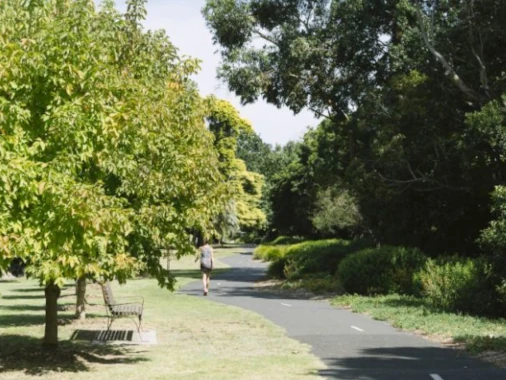
Ormond shares postcode 3204 with neighbouring McKinnon, and the two suburbs have spent the past decade quietly diverging. McKinnon's premium is school-zone driven. Ormond's is anchored to civic infrastructure: the station, North Road, the park, the strip. Same postcode. Different buyer.
The suburb sits in Glen Eira, around 12 kilometres south-east of Melbourne's CBD, on the Frankston line. North Road runs east-west across the centre of it, doubling as arterial road and retail spine.
The Ormond catchment story is more interesting than McKinnon's. Where McKinnon Secondary's zoning either includes you or it doesn't, in Ormond the catchment line cuts through the suburb. Eastern blocks fall inside. Western blocks fall outside. That distinction is small on a map and significant in the price.
What we see in Ormond, looking at the past decade, is a suburb that has finished one shift and started another. The level crossing at Ormond Station came out, the line dropped into a rail trench, and the over-station development has bounced between approval, revocation and revision without anything being built. The next shift is quieter: apartment supply around the station, gradual demographic change, and the slow reinvention of the North Road strip.
Three things define Ormond's built form: heritage residential stock, the North Road strip, and the recent apartment cluster around the station.
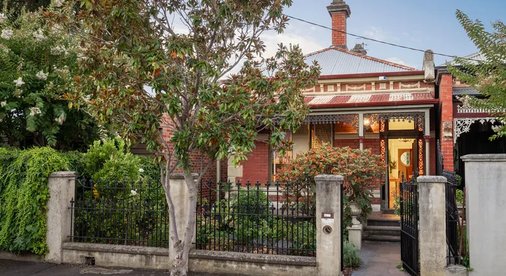
The residential streets carry interwar and Federation-era housing, with weatherboards, period brick, and a mix of original cottages and renovated family homes. Streets like Glen Orme Avenue, Booran Road, Katandra Road and Tucker Road are typical: low-rise, leafy, and quieter than the volume on North Road would suggest. Heritage character is uneven across the suburb. Ormond carries fewer formal heritage overlays than Elsternwick or Caulfield North, and that has practical implications for what can be done with a site.
North Road is the commercial spine. The strip carries over 200 businesses according to Glen Eira's own count, with density concentrated around the station. The mix is everyday rather than destination: bakeries, cafes, supermarkets, an established ice creamery, specialist food, allied health. The strip has been described in council planning documents as having more retail capacity than the local catchment can fully support, a long-running issue rather than a recent one.
The apartment story is newer. Mid-density development has followed the level crossing removal and the broader push for housing supply along established rail lines. The Ormond Place proposal, a 13-storey tower above the station, was approved by planning authorities and then revoked by Victorian parliament in 2017 after sustained local opposition. A revised, lower version has since been re-permitted but remains unbuilt, leaving a concrete deck above the station empty. Apartment activity shifted to the surrounding blocks at lower heights. New buildings are visible along North Road and the immediate side streets, and the apartment market here now follows a similar pattern to Carnegie, two stations north.
Ormond Station sits on the Frankston line, with trains running to Flinders Street in around 25 minutes off-peak. The line was grade-separated in 2016, with Ormond's level crossing removed and the rail line lowered into a trench. That changed traffic patterns on North Road, removed a long-standing congestion point, and enabled the station precinct to be redeveloped at higher density.
A practical note: no express trains stop at Ormond. Commuters travelling to the city stop at every station on the line, which adds time at peak. Drivers have direct access to the Monash Freeway via Warrigal Road, and to Chadstone Shopping Centre, roughly 10 minutes drive north-east.
Buses from Ormond station run laterally to Elsternwick and on to Chadstone in one direction, and to Elwood, Huntingdale and Monash University Clayton in the other. Cycling along North Road is possible but limited. The road carries arterial traffic and dedicated infrastructure is patchy. The pedestrian environment around the station is functional rather than considered, with the post-grade-separation works tidying up footpaths but leaving the broader strip's amenity issues unresolved.
On schools: McKinnon Secondary College's catchment is the dominant school question for buyers in 3204, and a portion of Ormond falls inside it. The catchment line runs through the suburb rather than around it, so two homes on neighbouring streets can have different secondary school access. We've covered the catchment in detail in our McKinnon profile, so buyers whose primary concern is secondary schooling should read that piece for the practical detail. Ormond's own primary schools include Ormond Primary School and St Kevin's Primary School on Glen Orme Avenue.
Buyer awareness of Ormond has risen meaningfully over the past few years. The level crossing removal narrative, the apartment supply story, and the McKinnon catchment overspill all feed it.
The post-grade-separation precinct redevelopment is the part that matters for property. The relevant question is what gets built within walking distance of the station, and what that means for apartment supply and house values nearby.
McKinnon and Ormond share a postcode, but the buyer pools are different. McKinnon transactions skew toward established families seeking the secondary school catchment, often with budgets stretched to access it. Ormond transactions skew across a wider band: apartment buyers near the station, families on the eastern blocks with catchment access, owner-occupiers further west who like Ormond's amenity but don't pay the catchment premium. That makes Ormond a more economically diverse postcode-half. For a buyer's advocate, it also makes brief discipline more important. "Looking in Ormond" can mean three different searches, with three different price brackets.
The catchment line is the practical lever. East of it, Ormond's pricing is strongly influenced by McKinnon Secondary access. West of it, the price reflects Ormond's own merits: transport, parks, the strip, heritage stock, without the school overlay. Where the line cuts a street in two, the difference shows up in actual sales data. Buyers who don't know the line exists routinely overpay for non-catchment properties on an assumption.
Three observable sub-markets in Ormond, each with distinct economics.
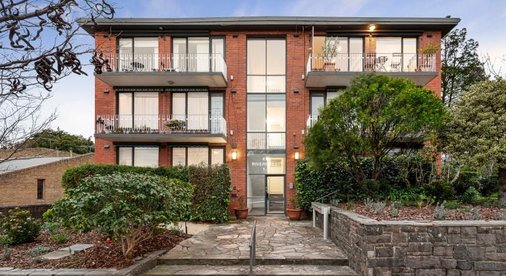
Apartment market. Concentrated around the station and along North Road. New stock is the dominant supply. Older walk-up apartments behind the strip transact at materially lower entry points than equivalent stock in Caulfield or Elsternwick. Yield-focused investors have started to look here, drawn by the post-station-redevelopment supply and the Frankston line access.
Catchment-side houses. The eastern blocks falling within the McKinnon Secondary catchment carry a clear premium. The gap shows up in actual sales data. This is where bidding pressure concentrates at auction, particularly during enrolment cycles.
Non-catchment houses. The western blocks. Same Ormond character, same proximity to the station, no McKinnon zoning. For families whose secondary school plans don't depend on McKinnon (independent schools, other state schools, no school-aged kids) these blocks deliver Ormond's amenity at a discount to the catchment side. We see this often in briefs where school zoning isn't a hard constraint and the question becomes "where does the same money buy more house."
Apartment-to-house transitions are also active. The deeper apartment supply at the entry end means more renters and first-home buyers have Ormond on their longer-term radar than a generation ago. Some convert to the house market within Ormond itself.
Buyers who anchor only to the average Ormond price tend to misprice their offer. The average is a blend of three different markets. The right comparable set narrows by sub-market first.
Ormond suits four buyer types in particular.
Transport-led buyers who want train access without paying Brighton or Hampton premiums. The 25-minute commute and the post-level-crossing station precinct are the draw.
Family buyers willing to accept a partial school catchment in exchange for better value. The eastern blocks deliver McKinnon access. The western blocks deliver everything else.
Apartment buyers wanting Ormond's amenity at lower entry points than Carnegie or Caulfield. The new station-area supply has expanded what's available, and the older walk-up stock further out from the strip has rarely been priced as a destination.
Buyers who prefer civic infrastructure over conspicuous consumption. Ormond is not Brighton. There is no foreshore, no bayside cachet, no destination retail. The signal here is everyday usability: strong transport, a working strip, parks within walking distance, schools nearby.
Ormond doesn't suit buyers looking for nightlife, foreshore living, or a marquee village strip. Those briefs belong elsewhere on the bay or in the inner south.
We've helped clients buy across all three Ormond sub-markets, and the brief discipline matters. Before searching for houses for sale in Ormond, work out which half of 3204 you're actually shopping in, what the catchment line means for your offer, and which sub-market your budget actually fits. We can help with that.
If you’d like to talk it through, we can map out the next steps.
No obligation. Just context.


It all starts with a confidential conversation.




.svg)

.svg)