


Sven joined Simon Clark of Sustainable Homes Melbourne on the House of Meaning podcast. The conversation covered information asymmetry, the psychology of auctions, and why most buyers in Melbourne spend eight to sixteen months trying to find a home.

Sven recently sat down with Simon Clark of Sustainable Homes Melbourne for the House of Meaning podcast. The two first crossed paths at a sustainable real estate event in Carlton, organised by Architects Declare, where builders, architects and agents had been pulled into the same room to talk about a problem nobody quite owns. The conversation that followed covered information asymmetry, the psychology of auctions, and the buyer's process, or more often the lack of one.
A few threads worth pulling out.
Australian property runs on caveat emptor. Buyer beware. That single legal principle pushes the entire burden of due diligence onto the person with the least information in the room.
Walk through a recently renovated home and you see fresh paint, new tiles, a clean kitchen. What you don't see is whether there's insulation in the walls, what the windows are rated to, or how the home actually performs once you're living in it. Most buyers don't know what they don't know. Most agents have no incentive to surface it.
That's not an indictment of the sell-side. It's the structure of the market. The selling agent works for the vendor, the property is the asset, and the buyer carries the rest. Information asymmetry is the baseline condition. The job of a buyer's agent is to close it.
Buyers in Melbourne routinely pay six figures more for a north-facing rear yard. The logic is sound on the surface. The execution is often where it falls apart.
If your living area sits at the back of the home, a north-facing rear means orientation is working for you by default. A south-facing rear forces the design to work harder. That's the part most buyers overlook, and the part that creates value if you're prepared to think about it.
Some of the best architectural responses in the inner south sit on south-facing blocks: internal courtyards, light wells, careful sectioning of the floorplan to draw in northern light. The savings on the purchase can be redirected into the build. With the right architect, the outcome is better and the bank account is healthier.
The point isn't that orientation doesn't matter. It does. The point is that the market prices it as if it's binary, and it isn't.
There's a piece of research worth knowing about if you're buying a home with an eye on resale: "Does voluntary disclosure create a green lemon problem?" It tracks what happens to property prices when sellers disclose energy performance.
The headline finding: a small-scale renovator paying retail trade rates can't reliably profit from pushing an existing home well above the minimum efficiency standard. The premium at sale doesn't cover the cost. The economics shift if you're staying in the home long enough to capture the running-cost savings, or if you push the build to a clear above-market standard and actually market it that way. Most agents don't.
It's a buyer-side insight, not a builder-side one. If you're paying a premium for an "upgraded" home, ask what was actually upgraded and what return the previous owner was likely to have made on it. The answer is often less than the listing copy suggests.
The single most useful frame from the episode: when you raise your hand at an auction, you sign an emotional contract with yourself. You haven't bought the home. You've imagined owning it.
Every time another bidder responds, that imagined home is being taken away from you. The decision shifts from "is this the right price" to "am I willing to lose this." That's escalation of commitment. It's why budgets blow out.
The standard advice, set a budget and stick to it, is correct and almost useless on its own. The pull to break it isn't greed. It's loss aversion. Naming the feeling is the first step in being able to sit with it.
A few things matter on the day.
Body language reads louder than people realise. Hesitation, side-glances at your partner, a dropped voice. They all signal that the bidder isn't in control. Auctioneers notice. Competing bidders notice. The room moves accordingly.
Count two or three Mississippi before each of your bids. Keep the intervals consistent. Use your normal voice. Don't try to be someone you're not, and don't try to impose. Just be present, deliberate, and audible. Control over yourself signals control of the situation.
The other piece is going in with the right attitude. If you've done the work and your instinct tells you the house is right, walk in with the intention of not leaving without a signed contract. Body language follows intent.
Most buyers take eight to sixteen months to buy a home in Melbourne. Very little of that is the market's fault. The bulk of it is the absence of a process.
A buyer without a process can't tell you what their non-negotiables are. They can't tell you why they're walking away from a property. They can't tell you what they're actually prioritising. So every inspection is a fresh data point with no framework to sort it into, and the agent, who has a process and a beat to keep, runs the conversation.
A buyer with a process narrows down what they want, why they want it, and what trade-offs they'll accept before they walk into the room. They know what the next step is at every stage. They know option A, option B, and option C the agent is likely to roll out next. That foresight takes the heat out of the moments where heat costs the most money.
Asked for his working definition, the answer was simple. A good home does what you need it to do, and makes you feel good while it's doing it.
Most property advice points the other way: buy for capital growth, buy for resale, buy what the data says. That's the right frame for an investment property. For a principal place of residence, it isn't. The data describes the median buyer. Your home isn't for the median buyer. It's for you.
The job, then, isn't to find the perfect house. It's to be a prepared buyer when the right one shows up. That's what good process looks like.
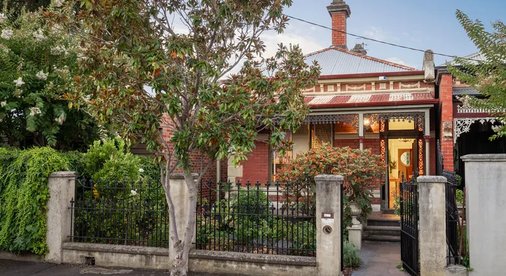
The full conversation covers more ground than this post: the Albert Park terrace that became a client's home, the violin shop on Johnson Street with a perspex light well above the stair void, and Simon's own perspective on the building side of the equation.
Find House of Meaning on Spotify or wherever you listen to podcasts. If you'd rather talk through a buying situation directly, the contact page is the easier route.
If you’d like to talk it through, we can map out the next steps.
No obligation. Just context.
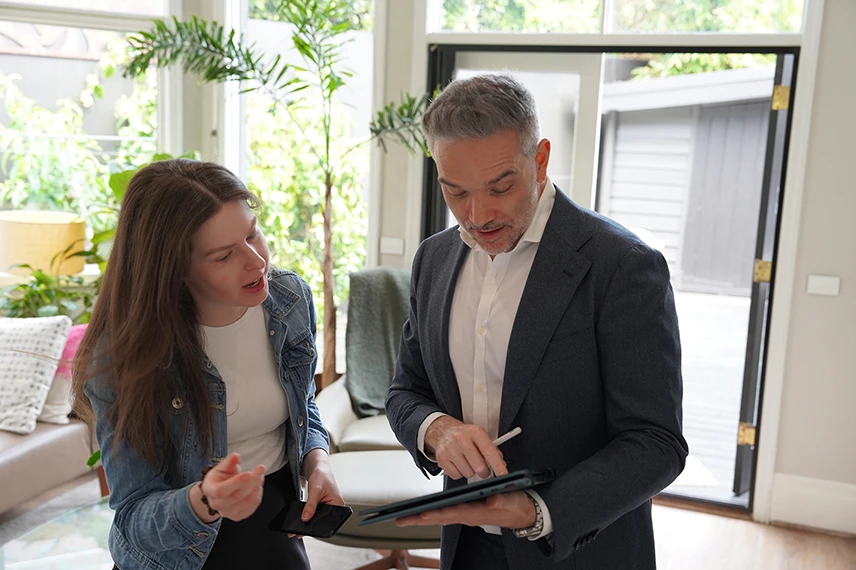

It all starts with a confidential conversation.



.svg)

.svg)